Showing posts with label Writing. Show all posts

Saturday, February 23, 2019

Update Day: Setting Goals

Believe it or not, it's the last Friday of the month, which means it's time for another Update Day. Since this post is about me finally setting my goals, get ready because it's going to be a long one.

To help you out, the first part is about how I'm doing and what I've been up to in February. Then at the first subheading, I start talking about how and why I set my goals.


I have to say, I'm feeling rather frustrated writing this. We're two months in and it still feels like I haven't really sorted anything out yet. I haven't been able to write since stopping in January.

It's just that nothing seems to fit into my days anymore except for work. I mean, I've decided on my goals at the end of January and have been keeping track of what I'm doing, but when I look at my "done" list for this month, it's all work-related with a few things like "unpack laundry" sneaked in.

Yeah. Right now, I'm still so busy that putting laundry (that I didn't even wash myself) into a cupboard is not a chore, but a daily goal.

So I'm finding that a tiiiiiiiiiny bit frustrating.

That said. I haven't only been working. The truth is, I feel like I've burned out last month much worse than I wanted to admit at the time. So much so that when I feel even a little tired (like after I've finished my work day), I just can't make myself write a much as a blog post, never mind working on fiction.

Instead, I've been working on some crafts. One of my best friends is expecting her second baby, so I'm busy crocheting a blanket. And when I don't feel like crocheting (because it's a bit less than nice to work with wool when it's this hot), I've been working on my needlepoint tapestry. I don't know if you guys even remember the one I'm talking about. I started it like three years ago.

It's a 138k-stitch monster of a thing. But I just felt like I wanted to work on it, so that's what I've been doing for fun. I'm finding it really soothing too, because it makes me not think about anything. How?


See those little ants running down one side of the black blocks, those are individual stitches. I'm working from a chart, and that means for every stitch I'm making, I'm counting up or down and then left to right. If I don't do that, I put the stitch in the wrong place, which is seriously going to suck because it's not really something that's easy to fix later. Because fixing a needlepoint tapestry stitch means ripping it and all of the other stitches I made with the same thread out and starting again.

So it absorbs a lot of attention and basically my usually noisy brain basically goes one two three four one two three stitch for hours on end.

But I digress. In January, I promised to share more information on my goals once I decided what they are, so here's what I did.

Starting Big and Drilling Down

Starting off, I decided to set multiple 5-year goals. These give me the framework of "Where do I want to be five years from now?" Some of them, I'm hoping to achieve in a shorter time, like my income goal, because I have already actively been working at that for a long time already. These goals are meant to be ambitious and can be as nebulous and "impossible" as I like. Why? Because the idea is to drill down into each one and find the things I can do daily to make them more possible. 

My Five-Year Goals Are: 

1) Earn $7500 a month from my writing and publishing skills
2) With a third of those earnings coming from publishing my own writing
3) Be healthier
4) The start-up I'm working on will be off the ground and self-sustaining
5) Do more art (that isn't writing)
6) Read more
7) Speak seven languages proficiently (if not fluently).

One thing worth noting here is that three of my goals is about "work" and three are about "don't work all the time, kid." It's basically about me looking to find a sense of balance. I can set up to ten of these goals, but for now I don't really want to do that because I think all of these goals are pretty big and all/consuming. So these are the ones I believe I can manage chasing at the same time.

From my five-year goals, I narrow down to my one-year goals. Now here is where I start to make my goals SMART.

For those of you wondering what SMART goals are, SMART is an acronym, which stands for:

S - specific, significant, stretching

M - measurable, meaningful, motivational

A - agreed upon, attainable, achievable, acceptable, action-oriented

R - realistic, relevant, reasonable, rewarding, results-oriented

T - time-based, time-bound, timely, tangible, trackable

Mostly my goals are specific, measurable, achievable, reasonable, and time-based.

In other words, by drilling down from my five-year goals, I take things that are mostly out of my sphere of control and doing the things I can control. Because each step I take brings me one step closer to making those impossible things possible.

My One-Year Goals

1) Write/Edit 250,000 words
2) Publish Wo6C3
3) Write Wo6C4
4) Read 12 books
5) Get to a healthier weight 
6) Finish one of my art WiPs
7) Improve my French

The top three goals are all writing goals, because right now, the own-writing side of my career is more of a priority right now and together they are aimed to add to my first two five-year goals. 

I set the goal of 12 books because that equates to one book a month, which feels doable, even if it is somewhat of a stretch. 

Given the approach I've taken to losing weight, I'm probably not going to hit my goal weight in one year, but I hope to at least be in a lower health-risk class be the end of the year. 

My art WiP will probably be the baby blanket I mentioned, because that has a June deadline. But if I do achieve my art goal, I'll probably just set another. 

With regards to improving my French and also my seven-language goal... I already speak four languages. In order of proficiency, those would be English, Afrikaans, French, and Mandarin. However the French and Mandarin are really more faded memories because I don't practice them enough. So the idea is for me to freshen up those two first before I move on to my next languages to learn. I'm still a bit torn on what I want those to be. I can go a really easy way and go for something like Dutch (which is close to Afrikaans), Spanish (close to French), and Italian (close to French and Spanish). Or I can go for more useful to me, which would be Spanish, German, and Arabic. Or I can just go be really random and go for something like Norwegian, Japanese, and Gaelic. I'll see what I feel like when my French and Mandarin are up to scratch again. 

Back to my goals. I broke my one-year goals down into quarter goals, which got broken down into monthly goals, which get broken down into weekly and daily goals. 

I try to limit the number of my quarterly and monthly goals to around five each, as it's more about focus than anything else. Weekly and daily goals can go up to ten each, and can relate to any of the bigger goals I've set. 

So for example, even though my yearly goal is about my weight, I can set a daily goal that's about my mental health because it relates to my five-year goal of being healthier. 

But since my quarterly goals are pretty much impossible, given that I couldn't do anything towards them for two of the three months, I'm going to skip to listing my monthly goals. 

Goals for March

1) Finish the freelance editing job I was booked for.
2) Write/edit 10,000 words.
3) Crochet 21 afghan squares for the baby blanket
4) Finish unpacking (yeah six months in and I'm still not done.) 
5) Read one book

So with the writing/editing goal, I'm not really being specific yet because I just want to get back into writing again. Once I can get into that routine, I can get back to focusing on any one project. 

With regards to reading one book, I'm actually in the middle of two books. One I'm reading for work (but also because it should benefit my writing/publishing goals) and one is in French, so either one I read will actually contribute to more than just my reading goal, which is handy. 

Bu yeah. I've finally set myself some goals. Now it's a matter of figuring out how the heck I'm going to achieve them. 

What about you? Do you set SMART goals? How's your year going so far? 

Wednesday, October 3, 2018

IWSG: A Fresh Start

More information here.

After about three months of drama around finding a house, we're finally moving to a new place. In fact, I'm writing this on Monday because I know that I'll be about knee deep into packing, loading, and moving things by the time this post comes live.

Maybe I'm overly optimistic, but it's really feeling like this move will mostly bring to an end five years of chaos that I've had to cope with every day. To that end, I'm really excited to get moving, even if the amount of stuff that needs to be dealt with would have other people pulling out their hair.

But at the same time, this new start also involves a ton of processing of another sort. Emotional. If this move is to be the first day of the rest of my life, I have to cut some stuff out and leave it right here in this house. 

I've been so locked in survival/defense/fight/flight mode that it's become my go to. The thing is... it's exhausting. Except for hopeful, my other single-word emotional status is currently drained. So in a lot of ways, I haven't felt like myself for at least three years... which is also why my fiction-writing productivity took a massive hit. 

I'm not a person hoping for a certain set of perfect circumstances, but when negativity and the accompanying anxiety hits often and at random, making you lose any small amount of momentum you might have gained literally the day before... It's heartbreaking. 

So the fact that I managed to get Book 3 of War of Six Crowns to any stage of completion despite this is something for me to be proud of. 

But despite this and despite my growing success as a full-time writer... I'm feeling a growing sense of discontent. In a sense this is a good thing. I'm actually calm enough and able to not be at panic stations for long enough to allow me time to miss certain things I had left by the way-side to just allow me to get through. 

See, I've been cutting back to the bare minimum so that I could keep going while dragging such a huge amount of drama with me. But now I'm very much to offload the drama right here. Which should really leave a lot of space for other things. And right now, that space feels like a void. A void of writing where I took over two years to finish a rewrite and revision because I hadn't been able to write consecutively for more than two days in a row in over two years. A void of art because I never felt secure enough to actually commit to an art project. 

Here's the thing though, I've been so used to... not... fitting everything in that the thought of moving furniture around in my head is pretty daunting. It feels almost like too much of a challenge to work and write and focus on my health and do more art (other than writing) and read more and resume my French practice so I don't lose it again and be more active on social media and... and... and... 

But the thing is that I just have to find a way. My thinking is to spend maybe the rest of the month evaluating my life and everything I want to do, and then decide how I'm going to start bringing those things in. 

Do you also find it daunting to make things fit into your life? How do you approach it?

Friday, September 28, 2018

Update Day: Celebration Time

Today is the last Friday of the month, so it's time for another Update Day for the Got Goals? Bloghop, where a few of us writerly bloggers share updates on our (lack of) progress towards our big and very important goals. If you're curious or want to join in, click here.


September was a hectic month for me. The first few days was filled with panic and anxiety. The few weeks after that were filled with good times because one of my oldest writing buddies came all the way from Seattle to visit. At the same time, I had a major work function, major work deadlines, and... just general chaos around moving house. And I haven't even physically moved house yet. Long story.

In short, most of my goals for this month fell by the way-side. But on the positive side, I had another record earning month despite all the chaos and I missed one of my major stepping stone goals by a relatively tiny amount. I was a bit peeved when I realized how close I got. But then I had a bit of a think and realized: Bloody hell. Two years ago, I started with starry eyes and an impossible goal. People told me not to even try this full-time writer thing. But here I am.

Full. 
Time. 
Writer.

Was it easy? No.

Was it fun all the time? Hell no.

Yet, despite all the challenges and the impossibility of what I was doing, I managed to build a thing. So yeah, a lot of other things took a knock so I could get here. This includes my writing and blogging, etc. But once we're settled in our new house, I'll be in a better place to actually write my own stuff than I've been in five years.

So all in all... Not bad.

I'm going to celebrate this month. And uh... move. Wish me luck.

How did your September go? Anything you're celebrating?

While we're on the subject of celebrating, an anthology I'm part of is now available for preorder. 


Enter our mysterious realms where the stories are as varied and rich as the types of soil on this and other planets. Enchanted forests are knotted with roots and vines. Dreaded paths take us through strange, unexplored places.

Investigate new worlds and houses frequented by ghosts. Come across witches and wizards and an assassin tasked to kill Death.

Meet hot robots, hungry winds, and the goddess of chaos. Explore alien lands, purgatorial realms, and a shocking place where people bury the living with their dead.

Encounter paranormal detectives, imprisoned dragons, dark demons, cursed jewels, and handsome prophets. Search shifting worlds trapped in mirrors and a disturbing future where a president aims to rid the world of Otherkind.

Experience a haunted journey on a riverboat, water sprites borne of pennies, preternatural creatures, ancient serpents, and the Lady of the Lake who lurks in dark waters.


From USA Today bestselling and popular science fiction and fantasy authors comes Elements of Untethered Realms, a supernatural compilation of the anthologies Twisted Earths, Mayhem in the Air, Ghosts of Fire, and Spirits in the Water. These forty thrilling tales feature authors Angela Brown, Jeff Chapman, Cathrina Constantine, Julie Flanders, River Fairchild, Gwen Gardner, Misha/M. Gerrick, Meradeth Houston, Graeme Ing, Simon Kewin, M. Pax, Christine Rains, Cherie Reich, and Catherine Stine.

Wednesday, August 1, 2018

IWSG: Learning to Write Again

It's the first day of the week, so time for another Insecure Writer's Support Group post.

Purpose: To share and encourage. Writers can express doubts and concerns without fear of appearing foolish or weak. Those who have been through the fire can offer assistance and guidance. It’s a safe haven for insecure writers of all kinds!

Posting: The first Wednesday of every month is officially Insecure Writer’s Support Group day. Post your thoughts on your own blog. Talk about your doubts and the fears you have conquered. Discuss your struggles and triumphs. Offer a word of encouragement for others who are struggling. Visit others in the group and connect with your fellow writer - aim for a dozen new people each time - and return comments. This group is all about connecting!


Friday, sometime after my rather victorious Update Day post, I felt a sudden pinch on my left wrist and noticed that the small bump I had, had swollen and was now bigger and aching.

I went to my doctor and... yeah. As I suspected but didn't want to really admit, I have a ganglion. Which is... annoying to say the least when you literally cannot afford the eight-week recovery time to cut it out. (And have a needle phobia. It's enough to stand still to be injected. But to let someone put a needle into this thing to pull the fluid out--NOPE.)

That means one thing: Changing my habits to make things easier on my wrist.

And a big one is in the way I type.

See... I'm a self-taught typist, which means I've learned all sorts of bad habits over the years that pretty much came back to bite me in the ass seventeen years later. Because while doctors don't know what causes these little buggers, hurting muscles does contribute, and... well... I've been straining my wrists for weeks, spending anything between twelve and fourteen hours per day on writing. The one that had the lump already was just the one that said "ENOUGH!!!" and called it a night.

And here's the thing, for as long as my wrist is inflamed and the ganglion is being a pain, touch typing, as in that skill I never learned, is probably going to be the safest way for me to write. And I know it will be good for me. But damn it all if learning touch typing while suffering from a ganglion and with work needing to be done doesn't make me feel stupid. 

Why? Well. I've been working on a computer for years. Years. I've been writing novels for seventeen, but I've been typing... well since I've learned to write. So we're talking about 22 years' worth of muscle memory I'm retraining on short notice... without being able to really practice for prolonged periods of time and OH BLOODY HELL I'M USING THE OLD WAY AGAIN.

Ahem. 

Yeah. It's really irritating, but I'm hoping the ganglion will go down ASAP. If the touch typing doesn't do it... I guess I'll finally be caving and getting dictation software.

Anyone else get ganglions? Any tips for me? Anyone else think it's stupid of a country's curriculum to not make typing compulsory when most employment requires typing for long periods of time? 


Wednesday, June 6, 2018

Insecure Writer's Support Group: Rolling Back the Hours

On the first Wednesday of every month, a sizable group of us writers take part in the Insecure Writer's Support group. We share our insecurities, because in the end, it helps us to realize that we're not the only ones feeling the way we do. If you want to check out the bloghop or sign up, you can find information here.

Also, if for whatever reason you prefer Wordpress, you can find this same post here.


As I mentioned on my Update Day post, I actually had an amazing month in May, and although there are still quite a few things up in the air, I think June might end up being a big one too.

One of the major highlights of May was that I signed a contract with a major company to help create their content. It actually suits me perfectly because I'm using my degree and my writing skills together.

For now, the contract is basically a test run until December, but given how happy the lady in charge of my work is, I'm starting to feel secure in the fact that an extension past that is probable, even likely. It's really strange to think that I'm this excited about the job, because it was so not what I had in mind when I started freelancing, but my brain is really enjoying the chance to use both hemispheres at the same time, since I have to be both analytical and creative, reading reams of reports and pulling all that information together into articles that people that haven't read those reports can understand.

Best of all, assuming this is a long-term kind of gig, it actually gives me the level of financial security I need to allow me more writing hours.

So where's the insecurity?

Well. In the fact that for the past two weeks, I've been sleeping through those writing hours, which means I'm still struggling to fit everything into my schedule.

See, when I was working fixed price gigs instead of hourly like I do now, my hours drifted. It didn't matter what time of the day I did something as long as it got done before deadline. And I was "filling" my writing hours with freelance work because for the past few months, I was in no shape to be creative. The stress and anxiety from my life exhausted me emotionally, and since freelance was paying my way, I put the emotional reserves I had into that so I can keep racking up the good ratings. (A strategy that paid off in a big way because it directly led to this contract.)

The overall result was that my sleeping patterns shifted to hours inoptimal to my writing. I went to bed at 2 a.m. and woke up at 8, maybe 9. Then I'd work from about 10 a.m. to as late as 11 p.m., and veg out until 2 a.m.

Bad bad Misha.

Because a lot of the stress points in my life have lifted, which leaves me wanting to work on my own stuff. Thing is, if I want uninterrupted writing hours, and I do, I need to wake up at 6 a.m. It's a simple thing, really. In theory, I should get to bed at around midnight and set my alarm.

Phht. Uh huh.

I did that.

Now I have the lovely sounds of my alarm as backdrop to my dreams.

As I sleep right through it to 8, maybe 9.

So now I'm going to move my hours some more and get to bed by 10 p.m. but it remains to be seen how that works out.

How do you guys on Daylight Savings Time manage to shift your sleeping patterns? It shouldn't be that different from what I'm trying to do. 

Monday, February 12, 2018

Social Contracts, The Prestige, and the Subtle Art of Mind-F*ckery


As I mentioned on Wednesday, I recently read a book that had some... let's call them issues. I'm not going to name names, but you guys will probably be able to track it down if you follow my social networks, or if you're patient enough. But if you do track the title down, keep in mind my comments can be seen as spoilers once you have the context, so choose wisely if you want to find out what book I'm talking about.

At any rate, I mostly did enjoy this book. It had an interesting voice and rapid pacing that did serve to keep me immersed in the reading.

But will I be reading this book's sequel, which is coming out soon?

No.

I could blame some of the plot issues this book had, but if those were the only ones, the book had entertained me enough to encourage me to (eventually, maybe) pick up the sequel. But no. The issue was a bit more serious.

The issue is that the writer broke her social contract with me.


Some writers seem to be completely unaware of the fact, but all works of fiction come with a reciprocal, unwritten social contract.

The reader agrees to suspend disbelief until the end of the book, trusting the writer's ability to tell a good story until the very end.

On the writer's side, there's the promise of a good story being told, and that any leap of faith taken by the reader will be either explained or rewarded in some way by the end.

I always talk about the plot and characterization in a book being its foundation. Well, taking this analogy further, this social contract of trust and reward basically stands as the reason why the foundation had been laid in the first place. The writer wants to entertain, and the reader wants to be entertained. The social contract makes it possible for both sides to both get and deliver what is needed for this transaction to occur.

My problem with this book is that I spent 90% of the book trusting the writer despite some logic issues in the story, only to be rewarded at the end with "Oh well, the conflicts, the stakes, the choices, and even the supposedly devastating sacrifices as the result of those choices never actually mattered and were all undone by the end."

While it had been foreshadowed from the start that this was the case, but nothing had prepared me for how little it all mattered in the end.

And so, at the end of it, I, being a reader, felt betrayed. So much so that I'm simply not willing to get back onto that roller-coaster again for the sequel.

So How Do Writers Deliver Their End of the Contract?

The main step, of course, is to tell a good story, which revolves around all the techniques you guys already know. 

But if you were to want to write a book that is designed to completely screw with your reader's minds, it basically comes down to one thing: 

Don't put the mind-f*ck ahead of the story. 

In other words, if you're putting so much effort into blowing the mind of the reader at every turn, you're actually harming the story, either by making it predictable, or by unraveling all the meaning you'd put into it.

Or in still other words, put the mind-blowing events into your plot, but don't make your plot about the mind-blowing events.  

This is such a difficult thing to explain without naming examples, so I will name two examples in movies. And to make the point I'm making clearer, I'll even make the main characters have the same vocation. 

I present to you: 

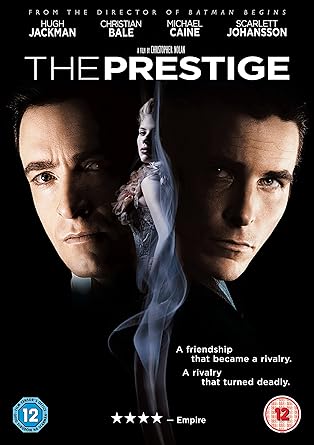
Image result for the prestige

and

Image result for now you see me


Before we continue: SPOILER WARNING!!!

Of the two, I think the book I'd read was trying to be The Prestige. And why wouldn't it?

In The Prestige, the pacing was tight. The conflict was no-holds-barred and take-no-prisoners. The stakes kept climbing. But here's the thing. The conflict centered around what two stage magicians were capable of doing to each other in the name of revenge. The mind-f*cks started coming when the understanding the viewer had of the events in the story took on a new meaning, once they realized what the magicians were willing to do to themselves in order to win in this revenge game. (Let me just say that those things are more horrific the more you think about them.) 

Everything in The Prestige is established, shown, and explained, peeling back layer after layer until the viewer is given clear sight of what they had been seeing all along. In other words, nothing was hidden, save for the meaning of what they had seen, and even that is revealed by the end as the huge twist. If viewers rewatch the movie, they will have a different experience, just because they understand all that's going on in context. But even knowing the context and twist, The Prestige is still a movie worth watching, simply because the characterization was excellent and the plot in itself is amazing. (Brilliant conflict. Huge and ever-increasing stakes driven by character motivation.) 

What the book ended up being was Now You See Me. This movie sets up a conflict, only to reveal it's a diversion, then sets up another thing, only to show it's fake. And another, and another, none of which is real. By the third time there's a plot twist (and I use the term loosely), the viewer's mind isn't blown, because the viewer knows that literally nothing that's happening is actually happening. So stakes? Nada. Conflict? Meh what conflict? We don't even know what the goal is yet. (If we don't know what the goal is, we don't know what is standing against the goal.) 

Plot twists are thrown in with little to no real ground work, all to "generate interest." And in the end, it is revealed that the one thing the viewer thought was real—in other words, the heist and the conflict with the detective—was all fake and that the whole time, there had been an entire other plot that the viewer had not been allowed to see on purpose, and that gets jumped on the viewer from left field with little more than a "ta-da!" in the third act. 

This in a nutshell was exactly what had happened in the book. Literally in the third act, we're not only introduced to this whole other unseen plot, but said plot literally undoes everything in the book, including the relationship between the two leads that had been developed as the story progressed.

So what happens is that once this other plot becomes known, the plot we readers had read—the one we had known and spent time on—doesn't gain a new meaning. It gains non-meaning. As in, if I reread this book again, I'll never be able to commit to the story again, because this story literally means nothing now. Nothing I had been shown in the story actually meant anything. The story is defined by what I hadn't been shown, and in short, by how much the writer had taken my trust without giving me anything of substance in return.

And instead of being mind-blown, I'm just really upset and let down. 

So if you are working on a book that hinges on some major plot twists, please do ask yourself: 

If my readers reread this book knowing the plot twists in it, will they still be presented with a compelling plot?

Or will everything I set up fall apart because of the way I resolved the story? 

If you answer yes to the latter, you failed to hold up your part of the social contract. It really is that simple. Now if you'll excuse me, I think I'll go rewatch The Prestige. 

Anyone else love The Prestige as much as I do? Anyone else feel as betrayed as I do when plot twists basically undo entire stories? 

Monday, February 5, 2018

Eef Lenaerts on Writing a Book About Traveling through Africa

One of my first freelance jobs was to do the editing, formatting, and cover design for a book about traveling through Africa from Egypt to South Africa. It was a great book for me to read, because the idea of traveling over Africa has always intrigued me. (Although I'd do it in reverse from how the writers Eef and Dries did it, seeing as I am in South Africa already.)

But because I enjoyed working on the book so much, I thought I'd invite Eef to do a guest post about what it was like for her to write it.


Hi all,

Like many of you here, we wrote a book! But we’re no writers, we’re travelers and we had absolutely had no idea how the hell to write a book, so we got some help from Misha.

The book is finally finished (thanks to Misha) and she asked us to write a guest post about the process of writing a book while traveling, so here we go!

Four years ago, we left Belgium with our car. Two years later, we reached South Africa. It was an adventure, with many ups and downs. We loved it, but at times we hated it. It was hot, it was cold, it was amazing, it was dreadful…but it was the adventure of a lifetime that no-one can take away from us.

We left as total dummies with our Toyota Landcruiser. We drove from Belgium to Turkey and took a ferry to Egypt to start our way down along the East Coast of Africa, with South Africa as our end goal.

We were total dummies. Young and eager to go, we couldn’t wait. We packed up our house, sold our belongings, and bought a 4x4 to go on the adventure of a lifetime!

We didn’t take enough preparations, so of course we ran in problems along the way, getting stuck in the dessert with a hi-lift jack, but no points to use the jack, having a spare battery for the fridge, but having a warm fridge, applying for a visa, but no USD to pay for it…

These were all small things that we could sort out, and they make some great stories now, but we could easily have avoided these issues. So after the umpteenth time of thinking “Oh really? Wish we knew this before!’ I decided to write a book for the other dummies in the world!

With a good mood, I started writing down things that were important to prepare before you leave home, ways to act in certain countries, hidden treasures along the road, etc. Gathering this information was easy, but making it into a book was way more difficult than I thought.

It took me two years to finish the book. One reason was because we were still traveling, so we had a lot going on. The other reason was simply that things change constantly in Africa! So the information about a border crossing from two years ago was absolutely out of date. This meant that apart from the actual writing, the book required A LOT of research. In the end, I had read the content so many times, I just couldn’t cope anymore.

So for me, it was a horrible experience. :P

I don’t think I’ll do it again in the near future, but the book is finished and I’m very proud of it!

So if you’re interested to have a look at what I made of it, or just need the final push to start an adventure (the big aim of this book is to give the people that push they need to get out the house and go and see the world), feel free to look it up! Part of this book’s profits will also go to the Rhino Fund Uganda, so the rhinos will thank you.

All the best,

Eef


Two years ago, Dries and Eef decided to throw caution to the wind. They packed up their house, sold their belongings and bought a 4x4 to go on the adventure of a lifetime, traveling over the African continent. It was a life-changing experience, filled with amazing sights and wonderful people, but it was also challenging because when they started, they had no idea about what they were letting themselves in for.

So to help others who want to share in this amazing adventure, Eef and Dries decided to share their experiences and advice learned the hard way, just to make things a little easier for new adventurers.

The tips range from what you should wear to what you should bring along, how to get through the borders to where you should camp and what you should do while you're there.

Which means that Into Africa is a fun read for armchair travelers, but especially useful as a guide for adventurers out to experience Africa for themselves.

A portion of proceeds from the sales of this book will go toward The Rhino Fund Uganda, an organization focused on saving rhinos from extinction.

Available on Amazon

Anyone else ever dream of traveling through Africa? 

Friday, January 19, 2018

How to Use Framing to Strengthen Your Story


This week, I've been thinking a lot about framing. A lot of us take framing for granted, but it's actually such a vital part of our writing. So I thought I'd talk about it today.

We often think of framing in terms of the plot frame. As in how a plot forms the backbone or frame over which the whole story goes. This is true, and as important, but what I'm thinking of is framing, almost in a photographic sense. 

Framing has a lot of different meanings in photography too, but what I'm talking about here is aiming your camera so that the contents of your frame (i.e. what will be in the picture) results in a pleasant image. Like so: 


When we write, we should be framing the chapters in the same way. See, a chapter isn't just a number with text after it. It's actually a snapshot out of your story, and like a photo, the best chapters are framed properly, so the contents do the best work possible toward progressing the plot. 

Since I've started freelance editing, I've been noticing quite often that writers seem to think that chapters should just begin and end, maybe at a set number of pages.

Many writers seem to think that, as long as the story gets told, it doesn't matter where the chapters start and finish. 

In a way, they're not wrong. Beautifully framed chapters won't do anything if the story is weak, but then, I don't really think you can beautifully frame chapters if you didn't sort your story out first. 

The thing is, the framing of one's chapters can be the difference between a good book and an excellent one. Or even an okay book and a good one. 

It all comes back to reader immersion.

See, readers have been trained to "read" certain things in a certain way. For example, a comma makes them pause. Periods make them pause longer. Line breaks mean there has been a change of some sort from one paragraph to the next, whether it's in location, time, or point of view character. The readers might not yet know what changed, but that line break signals them to be prepared for it, so when the change does become apparent, they're not pulled out of the story. 

Just so, readers are trained to read something into a chapter as well. A chapter is a unit, which follows after the previous one and goes in before the next. The end of the chapter means that the main content of said chapter has been dealt with. Even chapters with cliffhangers. There is obviously still something unresolved in that chapter, but something still happened, and progress of some sort has been made. 

When chapters don't work in this expected way, readers get this vague feeling that something about what they're reading feels "off." 

They probably won't even be able to lay their finger on the reason, but more often than not, that sense of writing being off comes either from pacing or framing problems. (And pacing could be a framing problem in itself.)  If chapters aren't framed nicely, your job of lulling the reader into staying immersed in a story becomes that much harder. 

So what are the signs of bad chapter framing? 


There are quite a few diverse things I can think of:

The chapter doesn't lead in. 
By this, I mean that writers open chapters in the middle of nowhere, giving readers no sense of where the characters are, what's going on, who's involved, or even who's there (which especially becomes an issue when we're dealing with larger casts).

Unless the chapter follows directly on the previous one (but not too directly, more on this later), make sure your reader can paint a picture in their mind's eye of what's going on before anything important happens. You don't want your scenes to look like they're happening in white mist. You don't want talking heads. And you don't want the reader to exclaim "where the heck did he/she/it come from just now?!" Because all these will pull your readers out of the story.

Nothing happens in the chapter. 
This is a common one with writers using flashbacks. Usually, your main plot is the one taking place in the present. That's the plot you want to progress. If you only have a paragraph of two of a character starting to reminisce, followed by the flashback scene and nothing else, nothing has happened in your chapter. Because even if the memory is fully action packed, your character did nothing in the now while they were remembering the past.

This isn't to say that there has to be action in the present all the time, but something does need to happen before the chapter plays out. So does the flashback cause a reaction? Does it cause an emotional response? Does it trigger a major decision? Put those responses in the same chapter as the flashback, because in that way, the flashback adds to the main plot in a direct, immediate, meaningful way.

A chapter ends abruptly.
Often, this goes hand in hand with the previous point, but whereas nothing happens in that example, this one is more a case of a chapter ending just as something interesting starts to happen. I'm not talking about cliffhangers here. This is something entirely different.

Chapters, like most plots, have a beginning, middle, and end. Something is introduced, something happens, and there's a resolution. I find, sometimes, that something will be introduced.

Yeah. Did you just get the feeling that I just left you hanging out to dry with that sentence? That's exactly what an abruptly ended chapter feels like. The reader knows there should be something coming after, but it's just not there. The blank space where the chapter ended becomes a gaping vacuum in your story.

A good example of this is a big revelation or admission by a character, and having that revelation be the chapter's end. This could work as a cliffhanger, but nothing else has happened in the chapter yet. This is bad enough, but when I turn the page, I find that the new chapter doesn't continue where the last one left off. So... what? Did the writer forget to finish it? Did he/she just not feel like writing that day....?

Takeaway here... write out your scenes, people. Its not the readers' job to fill in the blanks for you. 

Which brings me to my next point.

Glossing over major events.
Ooh... this is a subtle one. I make this mistake most often. It's too easy. See, we're taught as writers that we need to skip the boring parts and stick to the important bits. If we don't, the story becomes boring. So what we do is spend maybe a paragraph to tell the readers something along the lines of "nothing major has happened. X did this the whole time... it's about a week since you saw him last..."

And then we ease them into the chapter proper, where things are happening. The problem is that we sometimes overdo it. We gloss over too much, and important parts of the story as a whole get lost.

It's not cool to tell me a character became friends with another one without showing us as it happens. Sure, it's cool to save the reader from the boring parts, but some things, like growing relationships, discoveries that have bearing on the scene now... those sorts of things... we want to see. If you have to say "so this cool/interesting/important thing happened off-screen," it really means you're excluding the readers from your story, which means they'll no longer want to stay as immersed as they have been. 

The chapter ends for no reason.
As I mentioned before, a chapter has a beginning, a middle, and an end, and if you split the chapter in two for no reason, it just ends the one chapter abruptly, and starts the next in the middle of nowhere. Obviously, cliffhangers are the exception, but the reason why they exist is to create tension. That said, there are so many ways in which cliffhangers can be done wrong. 

Let me count the ways. 

Cliffhangers done wrong.
Honestly, I'm not a particular fan of the cliffhanger chapter ending. I don't hate it. I mean, it's still as good a writing tool as any. But more often than not, writers use them wrong, in some groan-inducing ways.

Prime examples:

Cliffhangers followed by cop-outs. (Gasp! He has a gun! Oh... It's a water pistol. *eye roll*)

Cliffhangers followed by glossing over to explain them away. (Oh, you were worried about the bad guy's bomb going off? Well, while I purposefully weren't allowing you to look, my genius investigator figured out not only how to magically find said bomb, but he also disarmed it with a toothpick and some bubblegum. Phew!)

Cliffhangers being the entire point of the chapter. If your whole point is to get from the beginning of a chapter to the cliffhanger, and nothing else happened on the way there, you're probably doing it wrong. And finally...

Cliffhangers. 
Happening. 
Every.
Bloody. 
Freaking. 
For heaven's sake. 
Please make it end. 
Chapter. 

One more thought. If you're writing a book with multiple points of view, it's probably not a good idea to use a cliffhanger chapter ending if it's going to tempt the reader even a little to skim over, or entirely skip, the other characters' points of view until the cliffhanger's resolved. 

Chapters are too long or too short.
This is where pacing comes in. As I mentioned before, readers read chapters as units of a story. But further than that, the speed at which a reader gets through those units influences their concept of the book's pacing. Shorter chapters=faster pacing, longer chapters=slower pacing.

So what happens if you have a whole bunch of long chapters with one thing happening after the other in quick succession? It feels wrong, because the chapter rate clashes with the story's actual pacing. Just so, too many short chapters will jar if your overall story unfolds at a slower rate. In such a case, it might be a good idea to look for this specifically, and combine or split chapters accordingly.

Framing your chapters is a subtle art. So subtle, in fact, that most people completely forget to do it, but most framing issues are simply solved. All it takes is adjusting the aim and focus of your chapter ever-so-slightly. 

Can you think of any other ways for chapters to be framed wrong? Any of my examples a pet peeve of yours? 

Friday, October 27, 2017

NaNo Need-to-Knows: How to Avoid Writer's Block When You're a Pantser

Hey everyone! Today's vlog post will be the last one I'll be posting on a Friday for a while, because each post for November will be about advice and/or encouragement for that specific week of NaNoWriMo.

If you're here for my monthly goal update post, click here.

If you would like to see links to all of the post in the NaNo Need-to-Knows Series, click here.

The script I used to record this vlog follows the video.


NaNoWriMo can be a dream and a nightmare for writers who fly by the seat of their pants as they write (henceforth referred to as pantsers, pantsing, etc.) On the plus side, NaNo seems almost designed for people who don’t want to plan, because we’re encouraged to just let go and write every step of the way.

On the negative side, if you paint yourself into a corner, it can be a disaster. In order to write 50,000 words in a month, you have to write an average of 1,667 words per single day. This might not seem too bad, but if you get stuck, the words needed to get back to par stack up really fast.

A lot of people try to prevent this by planning ahead and going into NaNoWriMo with something akin to a step-by-step guide to their book.

But we’re pantsers and that’s not what we do!

So what do we do?

We get stuck.

Often.

And this is frequently what we call writer’s block.

But it doesn’t have to be that way. We can “borrow” a few things from the plotters and adapt them to help us along.

The big thing I see as an advantage of plotting is that plotters know where they’re going with their book. Pantsers have this way of thinking that this is boring, but really, they’re just looking at it wrong.

See, just because we know where we’re headed doesn’t predetermine how we’re going to get there. And the getting there is really the fun part.

So it helps to go into NaNoWriMo with a few things settled in our mind. Knowing the main character(s), and their goal, conflict, and stakes is probably the best way to not get stuck.

However, if that smacks too much of plotting, you can get away with significantly less. How do I know? I’ve done (and won) NaNo by going into it knowing precisely one thing:

The climax of the story.

If I know what the big event or reveal will be at the end, I can use every scene before that point as a stepping stone to it. So if I get stuck in a scene, feeling like I don’t know where it’s going, I can then direct the scene towards progressing the in a way that brings me closer to the climactic point. And hopefully by then, I know enough about character, the goal, conflict and stakes to figure out how to make that progressive step forward. (But again, it does help to know all these before you start writing.)

Are you a plotter or a pantser? What do you have to know before starting? 

Thursday, October 26, 2017

NaNo Need-to-Knows: Conflict and Stakes

We're rapidly heading for the end of October and I have a lot of ground to cover, thanks to a really ill-timed internet outage. So today, I would like to talk about conflict and stakes together. (Sorry if that makes my post run long.)

If you would like to check out the rest of the NaNo Need-to-Knows series, please click here. 


So why are the conflict and stakes of the story so important to me that I would focus on them for my final NaNoWriMo  preparation post? 

Simply put, they (along with compelling characters) are what keeps the reader interested in reading the story. If the goal is the story's entire point, the conflict is what makes the goal uncertain, and the stakes are what makes the reader care about the outcome. 

If one is 100% certain of a story's outcome, what's the point of reading? This is why we get bored so quickly if there's just not enough challenges (i.e. conflict) standing between a character and their goal. The easier it is to achieve the goal, the less interesting it becomes, because the book also becomes more predictable. 

But Misha, you might say, some books are predictable simply because they fall in a certain genre. Yes and no...

A book being a romance, for example, gives you about 99% of a chance that there will be a happy ending, but then the experience of reading is more about how that happy ending occurs despite everything that stands in the characters' way. If there's no conflict, the end just happens, and it's just not very satisfying to a reader. 

So what is conflict? People have this nasty tendency to believe that conflict=fighting and bickering, and you can tell who those people are by seeing whose characters seem to fight all the time about things that could have been solved if they spoke to each other like normal human beings. 

That's the thing. Conflict, in the sense used when creating a story, isn't about fighting. It's a counterweight to the story's goal. In other words, the antagonist and his minions is a source of conflict, but so is the main character's fear of water if they have to swim in order to achieve their goal. The former is called external conflict, in other words, a challenge that comes from outside the main character. Then there's also internal conflict, which comes from within the character, and usually takes the form of fear, anger, sadness, self-doubt, etc. 

Ideally, you want conflict to come from both sources, because then it's not just a rote color-by-numbers walk-through until the character meets the big bad for a boss fight. Letting at least some of the conflict come from a character's heart and soul gives it all meaning. Which makes the reader care. 

But neither the goal nor conflict matters if the reader doesn't have a reason to care about the outcome. This is where your characterization and the stakes come in. Obviously, if the reader cares about a character, they will care about whether the character achieves their goal. But if you want the reader to care the most they can care about the outcome, you also need to give the main character some high costs to failing in their goal. 

In other words, your story needs some stakes. 

Broadly speaking, there are two ways you can do this. First, you can make the character's failure affect a lot of people. This is usually in the form of "everyone dies if the character doesn't succeed." Which is good, but not quite the most effective way to join the stakes with your readers' care towards a character. 

No, for that, making the stakes personal is the best approach. It might sound silly, but something as relatively small as "If the character doesn't succeed, his best friend will die." often implies higher stakes (emotionally speaking) than "everyone dies." The main character doesn't know "everyone" and so the reader doesn't either. It's just a reason to care less. 

So mix up your external and internal conflicts, and try to make even the high stakes you have feel personal, and you'll be well on your way towards creating a kick-ass story. 

Do you plan your conflict and stakes ahead of starting to write, or do you make them up as you go along? 

Before you go, I just wanted to also let you know that Spirits in the Water is making its way around the bloggosphere, and we're giving away some awesome prizes. 


If you would like to see the blog tour stops, please click here.

Wednesday, October 18, 2017

NaNo Need-to-Knows: The Inciting Incident

Continuing on my theme of plot-related need-to-knows for NaNoWriMo, I want to talk about the inciting incident today. What is it? And why is it so useful to know your story's inciting incident ahead of starting to write your NaNo Novel?


You know that line in book descriptions? "Everything changes when..."

The event that changes things for the character is the inciting incident. It's literally the event that "incites" the character to set the goal which carries the story.

And if the goal is your story's point, the inciting incident is then the catalyst that sparks off the story in earnest.

If you think about it from the reader's point of view, the story's goal doesn't exist until the inciting incident occurred. So the introduction has no direction; it's only an introduction. Direction only happens when the character says (directly or indirectly), "This is what I want to do." After that, the story is about whether or not that thing is achieved.

But it can't happen if there isn't some spark that makes the character set out on their journey in the first place.

For this reason, it's a good idea to have the inciting incident occur as soon as possible. Some people say within the first third of your story, but I personally think that's too long, unless your story has a slower pace. Others say you must start in medias res, and that the inciting incident has to happen in the first chapter. Which I say is too fast for most genres outside of mysteries (where the incident in question is someone dying or something being stolen) or a thriller. Personal experience says that most of my stories work best with a proper character intro, and the inciting incident occurring somewhere in the first fifth of a book. But that's because I prefer to emphasize my character arcs. Putting the inciting incident at around 10k words in (assuming I have a 50k book) gives me time to show the readers who the characters are before the inciting incident changes things, which I feel gives those changes more of an impact.

That said, I tend to personally leave it up to the story I'm writing, for the inciting incident to happen when it's ready to happen.

So why the spiel about where to put it, then?

Because a surprising amount of writers feel like their story is dragging half-way into the book and they can't tell why.

Often, the reason is that they've written half a novel's worth of words, but nothing's happened yet. So it's basically a half a novel of waffling around with no direction and no visible point. Because nothing happened to make the character decide to do something. And as such, nothing is done.

If you know what the inciting incident is supposed to be, you'll also know if it hasn't happened yet, and so you can make sure it does happen and soon enough to keep your story from lagging.

Do you pre-plan your inciting incidents? Do you prefer inciting incidents to happen right at the beginning, or at a later point in the story? 

Monday, October 16, 2017

NaNo Need-to-Knows: Your Story's Goal

This post is part of my ongoing-series about prepping for and surviving NaNoWriMo. Click here to find the rest of the series as it goes live.


Last week, I was talking about characterization and using a character's motivation to set the main story goal. This week, I want to go into this goal and its close buddy, the inciting incident.

For me, this order of doing things, of exploring the character before deciding on the goal, makes sense because I'm more character-driven. If you're plot-driven, you're probably going to want to decide on the story goal first and then create characters that will make the story of achieving said goal interesting. Both approaches work fine, especially if you pay attention not to sacrifice your character strength for your plot, or your plot's strength to preserve character.

But the point here is that, if you want a decent shot at finishing NaNoWriMo, your story needs a goal, and it's going to be incredibly helpful to know what that goal will be before you start.

But What Is This Goal I Speak Of? 

Let me just get this off my chest quickly: I'm not talking about those highly nebulous goals writers have for their stories, like "I want to teach children that it's okay to dream big." or "I want to write about homeless people." Nor will I go into why I don't (and probably won't ever) agree that such an approach is a good idea for genre writing. (I'm looking at you, Mark Twain, who stuffed up a perfectly good Arthurian time-travel tale with your incessant preaching.) Really. Don't get me started on that. 

Instead, I'm talking about the goal that forms the heart of your story itself. That thing that a character sets out to do, and the reason why readers keep turning pages to find out whether that thing comes about. 

In other words, the goal is the reason why a story should be read. A good example of a goal from books is Frodo's goal of destroying the One Ring in The Lord of the Rings. 

Or it can be an unstated (at least in the story itself) goal of the characters falling in love in your standard romance. Or of a character needing to move on, such as in Under the Tuscan Sun. But it's worth noting that often these goals tend to come with another, stated goal, and often come secondary to that stated goal. In Under the Tuscan Sun, Frances moves into an old, nearly decrepit house in Tuscany, and somehow needs to overcome the language and culture barrier in order to fix it up.

So why is the goal so important to me, coming second to (or maybe even standing even with) only characterization? Because the story's goal is its entire point. And every other plot aspect to a story has the goal at its foundation. 

If you approach plot by structuring according to the three-act structure, or according to beats a la Blake Snyder's Save the Cat, the goal is still the lynch pin you're building it up around. For example, the dark night of the soul, that moment where all hope is lost and the character has to dig deeper than ever before in order to succeed... What does that hope center on? The hope that the main story goal will be achieved. And what must the character succeed at? Yep. The goal.

The inciting incident is the moment that acts as the catalyst of setting the goal and so kicks off the story after the character introduction. 

The conflict in the story is anything and everything that complicates or makes the goal impossible to achieve. 

The stakes of a story are the costs associated with failure to attain the goal. 

And back to the three-act structure: What's the climax of any story about? 90% of the time, it's going to be about the last big push to try and achieve that goal. The rest of the time, it's about a major decision about that goal, or a major failure to achieve the goal.

Even the themes and messages from your story will be rooted in either the goal itself, or in the discoveries that characters make as they go after the goal. 

In other words, the goal is everywhere and it's everything. And as soon as you have readers caring about the characters and their journey, the goal and the success or failure at achieving it forms the major question that drives the readers to keep reading. Will Frodo destroy the One Ring? Will Frances succeed in fixing the house and will she find happiness again? 

Depending on the genre, setting this goal to be impossible and dangerous enough can be a major driver of a story's tension. Take Katniss's goal of surviving in The Hunger Games. But this also plays in with the conflict and stakes, which I will still get into. 

At any rate, knowing your goal, even if you're a pantser like me, gives you something to write towards. A point that pulls your writing forward and prevents you from waffling around too much, trying to find a direction for your story. (Although in saying this, I will admit that most of my rough drafts are focused almost exclusively on finding the goal in the first place. Yes, I'm secretly that character-driven. And that much of a pantser.)

How Does One Set the Goal?

There are a myriad of ways in which to do this, so I'll list a few. 

1) Like I mentioned in my post on characters, you can let the goal come out of your character's motivation. Think of your character and the type of person they are. What kind of goal would they set in a given situation? 
2) Write without setting the goal and hope for the best, or write a rough draft specifically to discover the goal. (Although realize that this probably will require you rewriting the entire thing once you've found your direction.)
3) Decide first thing what you want the goal to be and build the concept, scenarios and characters around it. 
4) Look at your main character again. Decide what goal would create the most internal (and/or external) conflict for a character, push them to (or beyond) their limits, and/or provide the greatest measure of character growth. 
5) If you're going with a genre that has an inherent, unstated goal (like the happily-ever-after in romances), what goal would you like to set (and state) that will act as a nice backdrop to, and will help create conflicts for the unstated main goal? A good example of this can be found in the movie You've Got Mail. Two characters have been anonymously chatting online and they're obviously made for each other. Problem is that they actually know each other in real life and hate each other because one's goal is to put the other's family business...out of business. 

These are approaches I've taken to set goals in my stories, but I'm sure there are more ways that I haven't thought of.

How do you find your story's main goal? 

Friday, October 13, 2017

NaNo Need-to-Knows: Picking Your Story Idea

Hey everyone! Today's my first vlog post for my NaNo Need-to-Knows series (click here for the list of posts as the series progresses). Right now, the vlog part is dealing more with survival strategies than technique (whereas my blog posts are more technical) so I thought I'd start at the very beginning.

The script I used for this vlog post is under the video.


October is here, and that means it’s time to start ramping up for NaNoWriMo. In case you’re unfamiliar with the term, NaNoWriMo, or National Novel Writing Month is a writing marathon where writers try to write a 50,000-word novel in the month of November.

It’s something I believe writers should try at least once, but NaNo is hard. I’m not going to lie. This will be my eighth NaNo, and I still have days in November when I wonder why I do it to myself.

But I always end November with a sense of accomplishment because I always get more done than I do in other months, even if I don’t get to 50,000 words.

It can be a bit of an overwhelming experience, especially for newbies, so I decided to start a blog and vlog series about things you need to know about and for NaNo. Hopefully it will make the process just a bit easier for you. I will provide the links to my blogs below.

Right now, my blog posts are dealing more with some story tips, while the vlogs are dealing with survival tips. And since this is Week 1 of the series, I thought I’d start with advice on deciding what you want to work on.

So you’ve decided you’re going to do NaNo, but you don’t know what you want to work on. What do you do?

My first tip is: Write what you wish you could read more of.

If you have been waiting for a book to come out about a pirate mermaid in space and it’s just not coming out, that could be your sign to write it yourself.

Bonus points because of the fact that you’re already passionate about your idea.

Which brings me to my next tip:

Pick the story idea you’re most passionate about.

If you have more than one idea that you want to get to, make sure you pick the one that makes your heart beat faster when you think about.

Writing is already a challenge. Racing time to write about 1,700 words a day makes it even harder. Accomplishing this mammoth task with a story that feels like a punishment to work on because you’re just not that into it is going to make NaNo almost impossible.

So don’t do it to yourself. Pick the idea you love.

But what to do if you’re equally passionate about both?

Pick the most complete story idea.

Once NaNo starts, you don’t want to stop to rework a story idea because it turned out not to be strong enough to carry a 50,000-word story.

So pick the idea with the biggest goals, the strongest inherent conflicts and the highest stakes. If your ideas lack those, it’s a good idea to figure them out for all of your possible options, and then compare.

I’ll providing tips on my blogs to help you with this.

But then, what if both stories are strong?

What if you’re equally passionate about two stories, and both of them come with everything you’d need to ever make them both awesome?

Just Pick One.

Yep, you heard me. If you’re wavering between two ideas, you’re really wasting time you could be spending on preparation or worse, on NaNo itself.

So if you trust your ideas, pick which one you’re going to write and promise to get to the other once this one is done. Be decisive and commit to one of your awesome ideas.

Or Pick Both.

Now we’re venturing into Rebel territory, but if you feel like you can handle it and you don’t want to leave one of your stories by the wayside, write both concurrently. I have a whole new series worth of advice for people who want to do this, but there’s just no time right now.

It’s not for everyone, though, so tread lightly. But just keep it in mind as an option, because if you have your heart set on NaNo’ing and you just can’t decide, it’s better to add 50,000 words across two books than it is to not write because you’re still wavering.

Before you go, do let me know if you’re going to do NaNo and leave your NaNo name so we can buddy up. Is this your first time or are you a veteran? Do you have any questions? What's your best advice for picking a story idea.

Wednesday, October 11, 2017

NaNo Need-to-Knows: Your Characters

As part of my NaNo Need-to-Knows series, I'm sharing advice on the things you need in order to get through NaNoWriMo. (Click here for a list of links for the ongoing series.)


For the rest of October, the blog part of this series will deal with some writing technique things you need to know in order to create a strong NaNoWriMo Novel.

Since I'm more of a character-driven writer, I'm starting with characterization, but you can sort out the plot-related aspects first, if that's what you want. (I'll be starting with those on Monday.)

But what does one have to figure out with regards to characterization? And why is it important?

Who Is Your Main Character?

Do they have a name? What do they do? What do they want? What are their hopes, dreams and aspirations? What are they willing to do in order to achieve those? What are their worst fears? What are they willing to do to avoid those?

Yes, the way a character looks can be important for description purposes, but when it comes to creating a strong story, you need to go deeper than the superficial. 

Why? 

Because knowing your character means you know what your character will do in a given situation, which in turn can help you drive the plot forward as you write. 

Is your character prone to keeping grudges? Then having something happen to make them want to avenge themselves will be a great way to set a strong story goal. AND your character will want to go after that goal. 

Want means there are now personal stakes to achieving the goal, which is one of the best ways to maintain tension in a story. 

So make sure you get to know your character before you start, or that you create enough opportunities in your writing during NaNoWriMo to explore your characterization. 

Some ways to do this exploration before NaNoWriMo: 
  • Spend time to create detailed notes as you build your character. I've heard the snowflake method is particularly good for this. (As with most plotting-related activities.) 
  • Or you can take my approach of assuming a character to be a real person that you need to get to know. This approach might be out there, but I find that, if I treat characters like real people, they tend to feel more real in my writing too. Often, I simply do this by letting them live and make their own decisions in a story as I write, but if I want to prepare ahead, I do interviews with my characters. Yes, I literally act like I'm drinking coffee with a character. I'll ask them all kinds of stuff, having some real, deep conversations with them, and then I'll note down their answers. Not only does doing this help you understand a character, but it also helps you nail down the rhythms and cadences of their voice. (Which does come in handy later.) 

What Motivates Your Characters? 

In simple terms, character motivation is the reason behind the reason behind the reason behind the reason why a character does something. Think of it like peeling an onion. There's the skin at the surface, but under that is another layer, and another, and another. The deeper you go, the closer to the heart you get. 

And if you can get to the heart of any situation with a character, you can use that to strengthen the impact of what's going on. You'll also instantly know when a scene doesn't make sense, if it goes against the character's motivation. 

For example. You have a character (let's call her Sally), who gives a bitchy response to a snarky comment from another character (Dan).

Sally could theoretically have hundreds of choices about how she's going to respond to Dan's sass, and she goes for being nasty. Why? Why didn't she walk away instead? Or play sweet? 

Because she sees every sassy comment as an attack on her person and feels the need to retaliate. Why? 

Because she feels like the whole world is out to get her and she needs to fight to survive. Why? 

Because she's seen the hard side of the world and has been in survival mode her entire life. 

Why?
....

And this can go on forever, really. The deeper you go, the more information you have to mine. Just three why's in and we have a very tantalizing clue about Sally's backstory that can help fill her out as a character. And the deeper you go, the more info you'll have. So keep asking why.

Another benefit to knowing your characters' motivations is that you can create some incredibly compelling conflict just by having two characters' motivations and the resulting desires they have oppose each other. 

Characters wanting things are nice. But I frequently want to eat a chocolate. What do they need? What is the thing they would do anything to get because that need comes from the depths of their souls? Those are the truly important things, and if Sally needs something to happen, and Dan equally needs that same thing not to occur, you have instant fireworks. So take the time to learn your characters' motivations, and then figure out if you can put them in opposition to each other. 

It just livens up every scene containing those characters, because now every moment between them matters. 

Thanks for reading! How do you approach characterization? Any further characterization advice? 

Next week, I'll be talking about story goals and inciting incidents, and why they're important. And on my vlog on Friday, I'll be sharing tips on how to choose between story ideas for NaNo. If you're a Patreon patron for as little as $1 a month, you'll be able to watch my vlog post on Thursday instead. 

Monday, October 9, 2017

NaNo Need-to-Knows: An Introduction

It was a bit of a shock a few days ago when I received a reminder from NaNoWriMo to announce my NaNo novel for this year. Silly, I know. You'd think I have a firmer hold on the progress of time, but there you go.

If you're new to writing and stumbled onto my blog, NaNoWriMo is short for National Novel Writing Month, where the goal is to write a "novel" or part of a novel of 50,000 words in the month of November.

It's a huge amount of fun, if you can handle the pressure, and the nice thing about it is that you're part of a larger NaNo community during this time. In fact, I met one of my best friends because of a NaNo event in my area. So yeah, it's a great way to get involved. Just click on the link up top for more information.

Anyway, since NaNoWriMo can be a bit overwhelming, especially for first-timers, I thought I'd spend the rest of October and November to give a bit of advice from my eight years of NaNo experience.


On Mondays, I'll do a series of blog posts (although the first post in this series will be on Wednesday to fit everything in, and I might use more Wednesdays if I need to). On Fridays, I'll be updating on my YouTube Channel. But don't worry, I'll be posting the video and my script on my blogs as well.

If you are joining and you want to buddy up with me, click here.

Okay, so before I start, I just want to clarify something about my approach. I'm a full-blown character-driven pantser, so I don't do much in the way of planning before I start a rough draft. That said, these posts will be useful to plot-driven plotters (which would be my polar opposites) as well. All you have to do is take my plot-related posts as reminders to include later if you're a pantser, and as some things to keep in mind if you plan if you're a plotter. And depending on whether you're a plot-driven or character-driven writer, you can scramble the order of my suggestions to fit you. All writing methods are valid, as long as your method helps you create a strong foundation to your story.

And the first few posts I'll be writing will be about the things you need to build that foundation. Then as we go into NaNo itself, I'll be changing to focus more on NaNo survival. (Because hey, no one said NaNo is easy.)

For ease of use, I'll be using this post as a table of contents for you to refer to.

Table of Contents: 


Who's going to join NaNoWriMo? What are you doing to prepare?

Friday, September 8, 2017

My Five Writing Rules

Hey everyone!

This video is a continuation of my vlog on making sense of writing advice. In the previous vlog, I had pointed out that not all rules suit all people, so this time I shared the rules I apply the most to my own writing.


Here's the script, for those of you who don't like the video thing...

My Five Writing Rules

I decided it’s time to get back to those writing rules. Previously, I talked about how no writing rule is ever hard and fast for every writer, but I thought it might be interesting to share my personal rules because those very much dictate the reading experience of my writing.
Man. I actually have a lot of them. But let’s start with 5.

1) In rough drafts, there are no rules.

For me, rough drafts are where my mind can really take wing and fly, so I try to write without worrying about anything. I write for me. What I find interesting. What I want to enjoy. And if that means breaking a million so-called writing rules, that’s fine. I rein it all back in later.

2) Always Rewrite.

Since I just let my words bleed onto the page, the end result is… Okay bad. It’s bad. Really. Really. Bad.

But I expected that and it’s okay. I really don’t believe in perfect first drafts. Because in between the million things that don’t work in the rough draft, there are the hundred things that do, and I wouldn’t have found them if I kept stressing about the quality of my output.

So I take those things I like and I build the story again from scratch, using those things as my foundation. And the result of that draft is miles better.

3) Wait for it…

My writing process is filled with stops and starts. I’ll do an intensive writing period where I’m rough drafting a book. As soon as it’s done, though, I set it aside for at least a month. Then I spend time furiously rewriting the same story. And another rest period. Then I revise. And wait. And edit. And wait… And so on.

Because when it comes to perfecting my work, I need distance from it. Distance means time away.

4) Edit and edit some more.

When it comes to getting the book ready for publishing, I’m a bit of an editing fiend. If drafting is for myself, editing is for my readers. So I’ll go over the manuscript again and again, doing my absolute best to make sure the readers have at least a little taste of my experience as I wrote it.

This is also the place where a story goes from meh to amazing, so I go over it again and again until I find nothing more to change. And then I bring outside help in to see if they can’t find anything I missed.

5) At some point, I have to stop.

This is probably the hardest rule for me to follow. I’m a perfectionist when it comes to my work, so I could find better ways to do things and say things and better places for commas almost indefinitely, if I let this perfectionistic streak run amok.

So there’s a point where I know I’m satisfied enough and where any further tweaking is superfluous. That’s where I stop.

It’s hard, though. And that’s where I miss having a publisher who can come in and pull the manuscript from my grabby hands.

That’s it for today! What is your biggest writing rule?