Showing posts with label tips for new writers. Show all posts

Friday, January 19, 2018

How to Use Framing to Strengthen Your Story


This week, I've been thinking a lot about framing. A lot of us take framing for granted, but it's actually such a vital part of our writing. So I thought I'd talk about it today.

We often think of framing in terms of the plot frame. As in how a plot forms the backbone or frame over which the whole story goes. This is true, and as important, but what I'm thinking of is framing, almost in a photographic sense. 

Framing has a lot of different meanings in photography too, but what I'm talking about here is aiming your camera so that the contents of your frame (i.e. what will be in the picture) results in a pleasant image. Like so: 


When we write, we should be framing the chapters in the same way. See, a chapter isn't just a number with text after it. It's actually a snapshot out of your story, and like a photo, the best chapters are framed properly, so the contents do the best work possible toward progressing the plot. 

Since I've started freelance editing, I've been noticing quite often that writers seem to think that chapters should just begin and end, maybe at a set number of pages.

Many writers seem to think that, as long as the story gets told, it doesn't matter where the chapters start and finish. 

In a way, they're not wrong. Beautifully framed chapters won't do anything if the story is weak, but then, I don't really think you can beautifully frame chapters if you didn't sort your story out first. 

The thing is, the framing of one's chapters can be the difference between a good book and an excellent one. Or even an okay book and a good one. 

It all comes back to reader immersion.

See, readers have been trained to "read" certain things in a certain way. For example, a comma makes them pause. Periods make them pause longer. Line breaks mean there has been a change of some sort from one paragraph to the next, whether it's in location, time, or point of view character. The readers might not yet know what changed, but that line break signals them to be prepared for it, so when the change does become apparent, they're not pulled out of the story. 

Just so, readers are trained to read something into a chapter as well. A chapter is a unit, which follows after the previous one and goes in before the next. The end of the chapter means that the main content of said chapter has been dealt with. Even chapters with cliffhangers. There is obviously still something unresolved in that chapter, but something still happened, and progress of some sort has been made. 

When chapters don't work in this expected way, readers get this vague feeling that something about what they're reading feels "off." 

They probably won't even be able to lay their finger on the reason, but more often than not, that sense of writing being off comes either from pacing or framing problems. (And pacing could be a framing problem in itself.)  If chapters aren't framed nicely, your job of lulling the reader into staying immersed in a story becomes that much harder. 

So what are the signs of bad chapter framing? 


There are quite a few diverse things I can think of:

The chapter doesn't lead in. 
By this, I mean that writers open chapters in the middle of nowhere, giving readers no sense of where the characters are, what's going on, who's involved, or even who's there (which especially becomes an issue when we're dealing with larger casts).

Unless the chapter follows directly on the previous one (but not too directly, more on this later), make sure your reader can paint a picture in their mind's eye of what's going on before anything important happens. You don't want your scenes to look like they're happening in white mist. You don't want talking heads. And you don't want the reader to exclaim "where the heck did he/she/it come from just now?!" Because all these will pull your readers out of the story.

Nothing happens in the chapter. 
This is a common one with writers using flashbacks. Usually, your main plot is the one taking place in the present. That's the plot you want to progress. If you only have a paragraph of two of a character starting to reminisce, followed by the flashback scene and nothing else, nothing has happened in your chapter. Because even if the memory is fully action packed, your character did nothing in the now while they were remembering the past.

This isn't to say that there has to be action in the present all the time, but something does need to happen before the chapter plays out. So does the flashback cause a reaction? Does it cause an emotional response? Does it trigger a major decision? Put those responses in the same chapter as the flashback, because in that way, the flashback adds to the main plot in a direct, immediate, meaningful way.

A chapter ends abruptly.
Often, this goes hand in hand with the previous point, but whereas nothing happens in that example, this one is more a case of a chapter ending just as something interesting starts to happen. I'm not talking about cliffhangers here. This is something entirely different.

Chapters, like most plots, have a beginning, middle, and end. Something is introduced, something happens, and there's a resolution. I find, sometimes, that something will be introduced.

Yeah. Did you just get the feeling that I just left you hanging out to dry with that sentence? That's exactly what an abruptly ended chapter feels like. The reader knows there should be something coming after, but it's just not there. The blank space where the chapter ended becomes a gaping vacuum in your story.

A good example of this is a big revelation or admission by a character, and having that revelation be the chapter's end. This could work as a cliffhanger, but nothing else has happened in the chapter yet. This is bad enough, but when I turn the page, I find that the new chapter doesn't continue where the last one left off. So... what? Did the writer forget to finish it? Did he/she just not feel like writing that day....?

Takeaway here... write out your scenes, people. Its not the readers' job to fill in the blanks for you. 

Which brings me to my next point.

Glossing over major events.
Ooh... this is a subtle one. I make this mistake most often. It's too easy. See, we're taught as writers that we need to skip the boring parts and stick to the important bits. If we don't, the story becomes boring. So what we do is spend maybe a paragraph to tell the readers something along the lines of "nothing major has happened. X did this the whole time... it's about a week since you saw him last..."

And then we ease them into the chapter proper, where things are happening. The problem is that we sometimes overdo it. We gloss over too much, and important parts of the story as a whole get lost.

It's not cool to tell me a character became friends with another one without showing us as it happens. Sure, it's cool to save the reader from the boring parts, but some things, like growing relationships, discoveries that have bearing on the scene now... those sorts of things... we want to see. If you have to say "so this cool/interesting/important thing happened off-screen," it really means you're excluding the readers from your story, which means they'll no longer want to stay as immersed as they have been. 

The chapter ends for no reason.
As I mentioned before, a chapter has a beginning, a middle, and an end, and if you split the chapter in two for no reason, it just ends the one chapter abruptly, and starts the next in the middle of nowhere. Obviously, cliffhangers are the exception, but the reason why they exist is to create tension. That said, there are so many ways in which cliffhangers can be done wrong. 

Let me count the ways. 

Cliffhangers done wrong.
Honestly, I'm not a particular fan of the cliffhanger chapter ending. I don't hate it. I mean, it's still as good a writing tool as any. But more often than not, writers use them wrong, in some groan-inducing ways.

Prime examples:

Cliffhangers followed by cop-outs. (Gasp! He has a gun! Oh... It's a water pistol. *eye roll*)

Cliffhangers followed by glossing over to explain them away. (Oh, you were worried about the bad guy's bomb going off? Well, while I purposefully weren't allowing you to look, my genius investigator figured out not only how to magically find said bomb, but he also disarmed it with a toothpick and some bubblegum. Phew!)

Cliffhangers being the entire point of the chapter. If your whole point is to get from the beginning of a chapter to the cliffhanger, and nothing else happened on the way there, you're probably doing it wrong. And finally...

Cliffhangers. 
Happening. 
Every.
Bloody. 
Freaking. 
For heaven's sake. 
Please make it end. 
Chapter. 

One more thought. If you're writing a book with multiple points of view, it's probably not a good idea to use a cliffhanger chapter ending if it's going to tempt the reader even a little to skim over, or entirely skip, the other characters' points of view until the cliffhanger's resolved. 

Chapters are too long or too short.
This is where pacing comes in. As I mentioned before, readers read chapters as units of a story. But further than that, the speed at which a reader gets through those units influences their concept of the book's pacing. Shorter chapters=faster pacing, longer chapters=slower pacing.

So what happens if you have a whole bunch of long chapters with one thing happening after the other in quick succession? It feels wrong, because the chapter rate clashes with the story's actual pacing. Just so, too many short chapters will jar if your overall story unfolds at a slower rate. In such a case, it might be a good idea to look for this specifically, and combine or split chapters accordingly.

Framing your chapters is a subtle art. So subtle, in fact, that most people completely forget to do it, but most framing issues are simply solved. All it takes is adjusting the aim and focus of your chapter ever-so-slightly. 

Can you think of any other ways for chapters to be framed wrong? Any of my examples a pet peeve of yours? 

Wednesday, March 8, 2017

The Writer's Life for Me Tag

Hey everyone.

Still somehow alive and kicking, although part of me doesn't feel like that. But... you know... keeping on keeping on.

As part of that, I decided to take part in the Writer's Life for Me Tag, and since I got tagged on YouTube, I thought I'd do it as a vlog.

Enjoy!


What are your three best pieces of writing advice?

Thursday, February 18, 2016

Annalisa Crawford on Reasons to Enter Writing Competitions

Hi everyone! Today, I'm welcoming Annalisa Crawford to my blog to tell us a bit more about entering writing competitions. Also, I want to congratulate her again for placing third in the Costa Awards. I'm so proud of you!

Reasons to Enter Writing Competitions 

by Annalisa Crawford

I love entering competitions - I like the idea of having my stories out in the world without having to do very much market research, and I like the anticipation when the long- or short-lists are released, followed closely by the winners. And, occasionally, I win... which I also like. Okay, I lose, as well; it's a bit of a lottery. But that's not a reason not to enter.

There are several regular comments people repeat when I talk to them about competitions. It's too expensive. It's a waste of time, you'll never win. Contests are scams.

You might have your own reasons for avoiding them, but I'll take the ones above one by one, and answer any others in the comments.

1.      It's too expensive.
oYes, some of them are. I've actually paid £17 for a single entry before. I don't pay that much often, but I weight up the prestige of the competition, the overall judge, and the prize money - and then I decide whether I have a story/can write a story that is worth £17.
oSome are completely free - such as the Costa Short Story Award. But you have to bear in mind how many people will enter a free competition, which will make your odds of winning reduce.
oMost of the competitions I enter are between £5 and £10.
2.      It's a waste of time.
oI tend to enter stories that I have hanging around, those that I don't know what to do with or have been rejected by a couple of magazines. Competitions usually have a looser idea of the type of story they are looking for - whereas a magazine will have a definite style.
oThe story can be tied up for several months, but as long as you build this into your submission plan, it won't be a problem.
oThe discipline of writing a story, refreshing it, submitting it to a deadline is important. It gives you something to work towards.
3.      You'll never win.
oWell, firstly, someone has to - why not you?
oOn the other hand, you probably won't. You'll be frustrated and angry, but you'll get over it, and you'll write something else. If you're sensible, you'll try to work out why that story didn't work but the 1st/2nd/3rd place entries did. You'll learn without even trying.
oA lot of the larger competitions these days are being judged by literary agents and publishers. They are not just judging the competition, they are looking out for good writers. Even if you don't win, they might see your name, and they might be interested in you.
oYears ago, when I was just starting out, I'd see the same names on the long-lists and short-lists, then I'd see them placing 1st, 2nd or 3rd. Then I'd see them publishing their first novels. One name I remember seeing was Helen Dunmore.
4.      Contests are scams.
oI haven't heard British writers complaining about this quite so much as US writers. But, if in doubt, don't enter - or spend some time researching.
oRead the terms and conditions - I know most people don't, but in this case it's very important. You need to make sure you are following the rules so you won't get disqualified, but you also need to know what happens to your story if you win - do you retain copyright, will the story be published. The terms will also flag up areas where it feels scam-like, in which case, don't enter!


How about you? Do you enter? Have you won? Do you have doubts that I haven't covered above?


Annalisa Crawford lives in Cornwall UK, with a good supply of moorland and beaches to keep her inspired. She lives with her husband, two sons, a dog and a cat.

She writes dark contemporary, character-driven stories, and has been winning competitions and publishing short stories in small press journals for many years. She recently won 3rd Place in the Costa Short Story Award 2015.

Friday, May 9, 2014

A Mystery/Thriller trend I wish would die.

So I had a rough day today and did a crit for Unicorn Bell, and this was the result. I'm posting it here too, since it dovetails nicely into a topic I'm currently enjoying a lot: Genre Trends I Wish Would Die.

However, I would love if you were epically awesome and here instead. And please feel free to look around while you're at it. It really is a worthwhile blog to visit for info on both indie and trade publishing and writing.

Okay. To the post....


Well that didn't work out to plan. See the point here is for someone to send me something to critique, and if there was an interesting thing to point out, I focus on that, especially if I had to crit a chapter, since chapters plus my crit would probably run too long.

However, I just finished reading a short story someone sent me to critique and... well... there wasn't much wrong. I had one suggestion to improve the big reveal (it's a locked-room mystery), but then, even as it is now, the reveal has a surprising (although it makes perfect sense) twist that makes the reveal worth-while, even if it could have been a bit more of a surprise.

Would you like to read the chapter? Sure you do. Here's the link.

Ooh. I actually do have an interesting point to raise coming from this crit. Plot twists and how they work. (Sorry if this is rambly. I had a 13 hour day thanks to a wedding where I have to arrange flowers. But I'll try to remain lucid enough to get the point across.)

Right. So everyone loves plot twists. They make readers scream, squee, cry, laugh with glee.... They take readers from one emotional extreme to another, making the reading experience feel like a roller coaster the reader wants to take again.

The thing is, plot twists have been exploited so many times that they do lose some of their effect. Especially the "It's a twist because you didn't get to see the main character doing something incredibly important to the plot. Get it?"

No... No I don't.

Mmm... I'm probably saying this because exhaustion lowers my inhibitions, but hey, it's my opinion, so here it is:

Those aren't plot twists. They're cop-outs.

And they kept being used again and again. Oh sure, they do take the reader's from extreme to extreme. But instead of: "OMG. OMG! OMG!! OMG!!!!!!!!!!!!!!! Ah AWESOME!!!!!" or even better: "OMG. OMG! OMG!! OMG!!!!!!!!!!!!!!! OH SHIT!!!!!"

These "twists" are more of an: "OMG!!!................... Oh."

Horrid, horrid use of exclamations, I know. Guess they're all escaping while my inner editor sleeps. Point is, taking readers to high stakes and massive tension and then dropping them on their asses is just lame. Really.

Sadly a lot of your run-of-the-mill bestselling thriller writers employ this tactic. I think people get dazed and dazzled by the adrenaline high followed by the crash after. Maybe it's like eating candy. After a sugar crash you crave more sugar, don't you?

Plot twists done correctly elevate stories to other realms entirely. It's like 80% dark chocolate compared to a cheapy milk chocolate (I.E. fake twists).

Sadder than the fact that these fake twists get abused is the fact that with a tiny bit more effort, a much more effective twist could be achieved.

All it takes is leaving breadcrumbs of information, leading readers right where they think they're headed, except you as the writer would be leading them somewhere else entirely.

Simply put, people are used to all sorts of information creeping into a story. So if  you put all the building blocks to your big twist out for them to see, in a way that makes them seem unrelated or unimportant, the reader will only see the whole picture when you reveal the twist, which basically acts as a way to put all the pieces together. And if that twist has mind-blowing effects on the characters/story/stakes... even better.

And truly brilliant writers can do this without hiding anything from the reader. A plot twist should be a moment of clarity when the reader sees everything they missed before, and is shocked because 1) s/he missed the clues and 2) at the MASSIVE repercussions those clues actually have.

So yes, PJ, if you're reading this: I called you a brilliant writer.

Monday, March 3, 2014

You've got that scary feeling...

Hey there, new kid. You know that feeling when you're about to start a new story?

That sense that you're not prepared. That you're never going to get the right story down and that the sentences will be all clunky and that your verbs will be weak and that there's absolutely NO WAY that you're going to make this story work.

Yeah. That feeling. The one that assails you the moment you face your first blank page.

Well... It never goes away. I've written for almost thirteen years now. I've finished... Two books to publishing standards, and five more rough drafts as well as four rewrites.

I've made all of those stories work except for one, and I'm working on it as soon as I put up this blog, because I now know what's wrong with it.

But last night, I started working on my mystery project and... I spent about fourteen hours playing games, two watching t.v. one and a half sleeping... Yeah. You get the idea. The amount of time I actually spent writing was about an hour.

All because every time I wanted to start, that feeling hit me. And me, choosing terrible moments to be undyingly optimistic about my writing, assumed I could start when the feeling went away.

Needless to say, it didn't. So by about 7 p.m. last night, I thought back to my previous drafts. With Doorways (the two publish quality books), I was all out terrified! I delayed starting by six months. SIX MONTHS. Because the thought of writing a story so epic and complex paralyzed me. ES, the book I'm writing yet again, has given me this feeling three times. Every time I tried to write it. With last year's NaNo, I got such terrible cold feet on October 31st that I almost gave up before I started.

But you know what? Whether something takes me a day, a week, months or even years, I always start an idea I have. Because if I didn't, nothing I ever wanted to write would get written, and my life would have been emptier for it.

So if you're about to start a new story and that feeling hits you, just chill. But do work through it. Because the only way to make the feeling fade for long enough to finish a story is to actually start writing it. Any you know what? Most of the time, those fears are unfounded anyway.

What was the worst time you got hit by this feeling? How long did it take you to start writing?

By the way, I posted more details on my query, synopsis, first chapter critique at Unicorn Bell. So if you need a fresh pair of eyes, please do check it out. :-)

Thursday, February 20, 2014

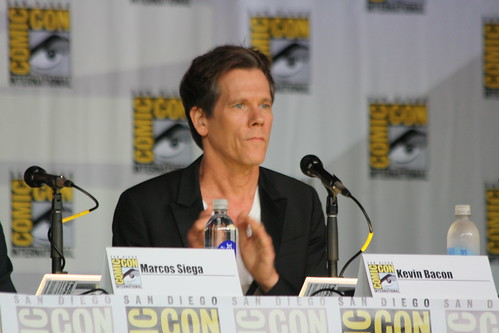
Plot and Kevin Bacon

Hey all! Today, I'm welcoming Elizabeth Seckman to my blog. She's going to tell us what Kevin Bacon taught her about plotting.

Take it away, Elizabeth. :-)

Thanks for having me over Misha! I feel a little like a kindergartener coming to the high school to share knowledge, but I will try to sound like I know what I'm talking about.

The most critical part of a good tale is the plot. The plot is the bones everything else in the story hangs on. No bones, no book.

And everything I learned about plotting, I got from Kevin Bacon.

Applaud me, Kevin. I am brilliant.

Yes, Kevin Bacon, the actor.

Ever heard of  the game, Six Degrees of Kevin Bacon?

Here's the game, in a nutshell: Link any actor to Kevin Bacon within six connections.

Okay, so here is how it works. Let's take Madonna. How is she connected to Kevin Bacon? She was married to Sean Penn, who starred with Kevin in Mystic River. So, that's a quick two degree separation. And the legend is you can link almost anyone in Hollywood to Kevin within six degrees.

Yeah, yeah...fun little party game, but what's it got to do with plotting?

I say plots MUST also be that tight. Let's pretend the plot is Kevin Bacon. Everything that happens in that story must, within six degrees, have something to do with the main plot. No tangents. No meandering. No superfluous characters to bog down the reader's memory. Every conversation and every action move the story along.

For example: let's say it's a romance. A single dad and his son. Dad needs a love interest. Now, pick the kid's sub plot...let's say he's learning disabled. Voila! Dad dates the teacher. Need some more conflict? Bring on dad's ex-wife. Now you have an antagonist who is bringing back story. See? Subplots + Plot are connected.

Keep it tight. Keep it moving.  Kevin will applaud you too.


Fate Intended is the third book in the Coulter Men Series.  Trip is the last of the Coulter sons to find
love. He’s a handsome man with all the skills a young spy needs to succeed. But when it comes to love, he misses the target. Jane is a sweet beauty who may or may not be wanted for murder. She’s hiding out as a cleaning lady when chance brings her and Trip together. It looks like a happily ever after is in the cross hairs until reality tries to destroy what fate has intended.


Elizabeth Seckman is a simple chick with a simple dream…to write stories people want to read.
photo credit: titi- via photopin cc

Thursday, January 16, 2014

The Secret to Sparkling Dialogue

Recently, I've started to read a book. By all estimations, I should have loved it. The synopsis was awesome. The cover was beautiful. And I believe the person who wrote the book is talented. 

Problem is, I don't like it. In fact, I'm struggling to get through the book because of one big issue. 

Dialogue. 

Don't get me wrong. Dialogue is awesome. It serves a great purpose by the plot along speedily. It's a great way to have characters bounce off each other. It's a great indication of conflict between characters. 

But ONLY is used simultaneously with narrative. In other words. Unless you've written a play, don't only use dialogue. Incidentally, even plays give us clues like: angrily. caustic. sing-song. etc. which give us readers a clue as to visualizing what's going on. Even then, most plays are a lot harder to read than to watch. For a good reason.

Dialogue, no matter how good, is dead if it doesn't have description and/or narrative. See the thing with reading is that we aren't "seeing" things the same way one would watching t.v. We need clues from the writing. So if there aren't any, it "looks" like the characters are standing stiffly and talking. It "sounds" like the characters are speaking in monotone. 

For example. 

"My baby died," I said. "From SIDS. Long ago, but it still hurts." 
"I'm sorry," Mike replied. "I can't imagine what it must be like to go through something like that." 
"The worst is that people thought I killed him." 

Yeah. Serious stuff, right? Emotional dynamite. Except... it's not. Because the reader has NO idea how the character's feeling as they talk about it. And them saying that it hurts just doesn't have as much impact as it could. Without these clues, the reader is lost. 

So let's see how much the dialogue changes by adding some narrative. 

"My baby died," I said. Years had passed and saying those three words made my throat burn. My eyes stung from many tears I still hadn't managed to finish crying. "From SIDS. Long ago, but it still hurts." 
"I'm sorry." Mike's expression softened and he reached for me. I kept my distance, hugging myself instead. After all this time, I still couldn't let someone share in my pain. If I went to him now, I'd break down.
He averted his gaze, slowly lowering his arm. "I can't imagine what it must be like to go through something like that."
No. No one got it. Only people who lost people knew what true pain was. At least Mike acknowledged that he didn't know. Unlike quite a few people who callously insisted that I get over the death of my first and only child.  
"The worst is that some people thought I killed him." 

Immediately, the narrative parts give the dialogue depth. Now, we know the POV Character deals with some crushing pain at losing her child. We also see some sort of tension between her and Mike. He obviously wants her to be there for her, but she won't let him. All this information in a neat dozen sentences. 

"But MISHAAAA," some of you might say, "That slowed the pacing down!"

Firstly, it's important to slow the pace down for important bits. Readers need to linger there, to absorb what's going on. 

Secondly, if you really want to cut on the narrative, feel free, but never cut it out completely. Even if you only have brief flashes of thought, or mentions of facial expressions, actions etc. 

Those little bits you add could make the difference between a dead book and a sparkling one. 

Do you tend to write more narrative? Or are you a dialogue-heavy writer? 

Monday, January 6, 2014

Five ways to get back into the writing groove.

A lot of people take time off from writing during the Christmas season. If they're anything like me, it means that getting back into writing mode can be a bit tricky. So I thought I'd share some of the more efficient ways I use to get my writing groove back. 

Music. 


I play music reminding me of the stories I'm writing, even when I'm doing something else. These are also the soundtracks I use while writing, so hearing the songs again stirs some creative thoughts up. 

Writing prompts. 


It's great to be able to just write for the heck of it, without worrying about what you'll be able to use later. So if you haven't written in a while, starting off with some low-pressure writing might be exactly what you need to get going. 

Character interviews. 


Starting off just chatting with characters can give amazing inspiration in surprising directions. This also works extremely well when your story's starting to feel dull. 

Reread what you've written. 


Not recommended if you're an over-editor, but sometimes, all you need to get back into writing gear is to relive the awesomeness you've penned down before. Remember to look on the bright side and to ignore the nitpicky issues. 

Start off by writing something totally random. 


The hardest part about writing after a long time away is starting. Writing something random tends to open up the writing channels, letting you think what you actually write down. I once broke a six month writer's block by opening a chapter with: "The gunk stuck to his mouth like peanut butter. He hated peanut butter." Funnily enough, those sentences ended up in the final cut of The Vanished Knight. 

As you might see, all of those suggestions have to do with chilling out before you start. Forcing yourself works too, but it's much easier to want to write. It's always trickier to start when you're panicking about how to do it. And the how's and why's almost always come when you're not looking for them. 

I hope this helps! 

Anyone else have pointers for getting back into writing routine?

Tuesday, September 17, 2013

When I say "Just Write"...

I've recently returned to social media with a vengeance and you might have noticed, because lately I've been writing quite a few posts inspired by events on other social media.

Mainly, the reason for this was that... well... Blogging really helps me when I have a lot to say.

Today is another one of these posts. Although a lot less angry because it wasn't sparked by someone being an idiot.

This time, it was sparked by a lot of first time writers who are being (naturally) lacking in confidence or even down-right insecure. It might be a bit more direct, though, in the interest in helping the new kids see the light faster.

One of them got annoyed because her every writing question got answered by: "Write it first", "Just write"'s cousin.

Others commented that they also got annoyed by that answer, because it was a cop out. Instead of a "real answer" we veterans just pat new kids on the heads and tell them to write.

Honestly, I can't say I blame them. But I do think the phrase is misunderstood.

So here I am, explaining my take on "Write it first" and "Just write", real answer style:

1. This doesn't encourage people to jump into a story unprepared. 


There are plotters, pantsers and hybrids out there, and my telling people in general to just write the damn story isn't a way to tell them all to become pantsers. It does, however mean that once you've start, that you should try your absolute best to finish that story. There are reasons not to finish a story. But you'll know them by the fact that you'll have a reason to shelf it without having to ask anyone else.

2. Just write = Suck it up and keep going. 


We writers have three serious enemies that always fight our attempts to get writing done: fear, inner critics and inner censors.

If you've written past that initial thrill of new inspiration, you'll know them well. What if I don't have what it takes to write this story? I can't possibly let that happen to my characters. This isn't good enough. I shouldn't want to be a writer. Who was I kidding? 

They never go away. And no amount of other people telling you you're good enough and that your story will come out fine will make them leave. The only way to beat them is to keep on writing regardless of what those voices say. 

You're welcome to complain about your doubts and insecurities, but all your true writer friends will tell you to suck it up, buttercup keep writing. This is, in fact, the strongest encouragement we have. We can't promise you that you'll get a million dollar book deal. Or that you'll even get a deal. But we can promise that you can finish a story. And that in itself is a huge accomplishment.

3. Stop over-thinking. 


This is actually what got me into writing today's post. I spent the past few weeks writing answers to questions like:

When is it okay to end a chapter? 

What are the pros and cons of writing in first person? 

I have this awesome idea about writing about this war people don't really know about it, but I'm changing it into a spec fic. But is it a good idea? 

And my current personal favorite: How do I avoid info dumps? How do I discretely disperse information throughout the story? 

Oh and: What should I write to manipulate the maximum amount of readers into reading my book?

New kids, I love you. I really do. I do my utmost to give you the tools you need to get those stories written. But you're never going to get that book done if you're constantly worrying about doing things just right so other people (who you don't even know) will think you're an awesome writer.

Write until you feel the chapter is done.

There are no pros and cons to writing a certain way. Only ways of writing that do or don't suit you.

If you love a story idea, it's a good idea. Now go turn it into a book.

Avoid info dumps by either not writing them, or by writing them and cutting them out later. And then you discretely disperse information throughout your story. COME ON. YOU ALREADY KNEW THIS!!!

And for the love of all that is holy. Stop worrying about manipulating millions into reading your book. Firstly, writers have no power over readers until they've already decided to buy and read your book. If you think that writing a certain story in a certain way will win you readers, you're wrong. If you're writing, thinking that it's the easy track to fame (as brought to my attention by your desire to manipulate millions into reading your book), you're wrong. Seriously wrong. Not only that, you're writing for the wrong reasons and therefore doomed to fail unless you change your thinking.

There is no one recipe for writing success. Only this: If you focus on your story and actually write what you love, in the way you love to write it, you'll find at least some measure of success. Eventually. But know that money probably won't be it. Face it. Love it. Write without worrying about it. Takes off a lot of pressure and makes writing a lot more fun.

If you can think of a best seller in our time, odds are there are a lot of people who didn't think it would do well. Those books' authors wrote them anyway. 

Go you and do the same.

Just write.

Perfection comes from editing anyway.

Writing veterans: what does "Just write" and "Write it first" mean when you use it?

Thursday, September 12, 2013

Writing Lesson in Horse Riding

I recently figured that hey, I write about knights and cowboys. Maybe I should learn how to ride a horse myself.

It's something I've always wanted to do. There's something absolutely beautiful about seeing a horse and rider in harmony. Something almost mystical.

Learning how to ride, is another animal altogether. There was Calypso, who hates me. Really. I went up to him, trusting him and... well... He tried to head-butt me. And the riding went worse.

So given that Calypso was out to get me, my instructor introduced me to Juno. Now Juno and I hit it off. With Juno, I thought I'd be able to go all the way.

Except the second time I rode him (yes, I know it's stupid to name a stallion for the Roman goddess of women and motherhood), he started to do things that made me less than comfortable. I mean, I'm new to this riding thing. So when I want the horse to stop, it's nice to know the horse will stop. Still, I figured it'd be okay, since I'd grow better as I practiced more.

The lesson after that, though, I was asked to ride Quicksilver. Now Quicky is rather an ornery beast. He's the one who puts all the horses on the farm in their places. And when he does, he kicks butt and takes names. He's also the one who wants to be in front no matter what, so he's faster than either of the other two. And he bites any horse who tries to take the lead from him.

The thing is... Quicky and I simply hit it off. Sure, he was fast, but never in a way that undermined the trust I had to put in him. In fact, riding him gave me the confidence to think I could actually learn other things. Most importantly, though, he loves me too. If there's a group of people and he's loose, he comes to me and lowers his head for me to pet him. Is he the horse I can trust? Possibly. He might change his mind later, but for now, we're getting along perfectly, even if logic says I shouldn't have liked him.

Incidentally, today, I had to ride Juno and my mom had to ride Quicky. Juno was actually scarier today than Calypso. And my mother felt the same way about Quicky.

Now, I bet you're wondering how I'm bringing this to writing. Well.

When I started writing, there was a western. We got along okay, but when my mom took my computer and gave it to someone else, I stopped working on it for years. The spark just wasn't there. (Juno.)

Later on, there was a fantasy. A quest, in fact. With a chosen one. But it was dark. Took me places I didn't want to go. In fact, it was part of some stuff I was going through at the time that really really messed me up in ways that made my university issues look like kindergarten. In the end, I burnt it. Yep. Wiped it, and all the back-ups, and burnt all the plans and drawings I'd made for it. (Calypso)

I have a few other drafts that I could explain, but right now, there aren't horses that match them.

Finally, in walked a character while I was re-reading Chronicles of Narnia. After all those failed attempts, I'd decided to give up on writing idea until I was certain that my idea was a good one. The character didn't take no for an answer, and the story he revealed to me was so good that I knew I'd finish it. To put money where my mouth was, I even started this blog as My First Book. I planned it to be a blog of me finishing a book and getting it published.

Was it because the story was easy? No. In fact, my older bloggy friends might recall that I called it The Beast. The story was huge. It defied my every attempt at pre-planning. The characters were reticent. In fact I hated one of the main characters. But I couldn't give up. I didn't want to. (That story went on to become The Vanished Knight.)

Maybe it's too soon to make this call, but that sounds a lot like Quicksilver. A bit of a bastard, but hey, it picked me and I love it for giving me that honor.

So in summary, the lesson I've learnt so far in writing and horse riding:

Just because you're struggling to get into it doesn't mean that you should give up. It could be that you just have the wrong horse for right now. 
 
Anyone want to talk about the drafts before the one they finished? 

Monday, August 19, 2013

In which I give my two cents on what makes a real writer.

I know I said I'd open up nominations today, but I decided this is a bit more important.

See there's this little discussion going around on google plus about what makes someone a real writer.

Here's the highlights of what people said that I've read before I decided to write this. And hey, maybe it's completely unnecessary. I have no idea how many new writers come to my blog.

But I guess you all figured out that I have a heart for helping them. I love encouraging people to write. I love giving advice on stuff I've learnt that helps them to crack stuff that took me years. Because honestly, I know that the stuff I write on plot, structure, characterization etc. doesn't really interest the veteran writers. They know all this already.

The thing is, being a writer, in its purest form, is dedication to writing.

It's not about you writing like me. Or me writing like you.

It's not about writing the perfect first draft.

It's not about a deep knowledge of grammar. It's not about having a huge and obscure vocabulary.

It's about dedication to the craft. It's about writing until you want to cry because you don't think the story will end. And then, it's about writing some more until you do get there. All that stuff about having a good manuscript, and fixing grammar, and picking the better word to say exactly what you mean, the way you mean it, come later.

All that stuff, even if you can write like Mark Twain or Ernest Hemingway or whoever, doesn't make you a writer any more than putting icing over a brick turns it into a cake.

What makes you a writer, is wanting to write when you can't. And writing whenever you can. Even if it means giving up t.v. time or sleeping an hour later.

Yes, there are some writers who are better than others. That is determined by the icing I mentioned. So I'm not saying that it's wise to publish without editing. I am saying that you should learn how to build a story around a structure.

But don't put off writing until after you've learnt. You'll never learn the perfect amount of writing knowledge. There's nothing that will qualify you as a writer.

Except. For. Writing.

Thanks for reading.

Friday, August 16, 2013

Let's talk about world building.

Before I start today, I just want to let you know that I've been invited to join the bloggers of Untethered Realms. I know most of them, and know that they're seriously talented, so I do hope you'll go check out what they're doing...

But for today, I want to write about plot.

Until last night, I thought I was a character driven writer. But then I sat through a fantasy world building hangout, and spent the whole time repeating the same mantra in my head. (I couldn't turn it off.)

How would it be relevant to the plot? 

The thing is, I know that nothing technically has to be relevant. Some people make a lot of money off books with slow plots. I can't slam them.

Personally, I like my plots thick and fast. Rich with detail, yes, but not so as to yank me out of the growing story in order to describe the finer details of a given culture or political system or whatever.

To me, writing a fantasy world is pretty similar to characterization. If I write a character, I usually know millions of little details about him or her, without them ever making it into my book. Yes, it's super important that I need to know them. The reader, however, only needs to know enough for them not to wonder what the heck is going on.

It's precisely the same with the world-building. For the Doorways series, I know enough about the world's history to write a whole other series just about that. Heck, I know enough history from a single one of the world's country to write a series. And there are four. The thing is, if I put all of that into the books, I'd swamp the reader with information which (while it could be argued that the history is relevant) isn't strictly necessary to put them through the plot.

I actually take it further. I don't explain the history. I don't explain the political systems. I don't spend pages and pages of description. What I do is to explain what's needed right now and trust the reader to put together the full picture themselves. Yes, some people might grow impatient, because it might take a few books to build a complete picture. But the pay-off is that my plot moves along at a faster pace.

Which I like.

But like I said, my way isn't the only way. Any writer working on a spec fic novel eventually needs to decide on an approach to the world they'll develop.

1) Do you want to showcase your world as a character in itself? 
2) Do you want your plot to move slower? (If so, exploring the world is a good way to do it without boring people. Just keep in mind that it's a fine line to toe.)
3) Which factors of the world determines your plot and characterization? If you have some macro issues coming down on your characters (say a world where tributes are sent every year to kill each other for punishment of an old rebellion), you'll need to spend some time explaining. Do try to keep the explanations relevant to the moment, though.

There are probably other questions that'll come from answering these questions, but those are the big ones. If you know those, you can probably figure out how you want to represent your world in your novel.

So, spec fic writers, how do you usually prefer to represent your worlds?

And readers, how do you prefer your fantasies? Slower and rich in detail, or directly to the point with some fantasy thrown in?

Thursday, August 8, 2013

Writing the Voice

Voice is something everyone's looking for, but that everyone's struggling to define. Many people insist that they should find their author's voice before they start writing. Mmm... maybe. If you're writing about themselves or non-fiction. 

To me, though, Voice is a given story's tone and mood. It's responsible for the way a story feels. I believe that if the story's fiction, this feel should be determined by its characters. Not the author. The author shouldn't be seen at all. 

Instead, the Voice lets the reader gain insight into the character. Because writing he/she/it is a bit tedious when done repeatedly, I'm calling today's character Tom. 

Now. To nail Tom's voice, we'd need to look at his likes and dislikes. We need to take into account what excites him. What bores him? What sort of person is he like? Straight and to the point? Or is he poetic? You can ask a million questions about this guy's personality and about a million of them will have relevance to his Voice. 

Think I'm kidding? Watch this. 

This is me the author. 

Tom saw a pretty girl at the bar. She sat alone, drinking a cocktail. The barman kept glancing her way. 

This is from the point of view of Tom, the slightly arrogant, but not unlikable (at least not to me) alpha-male. 

Today, a lone babe occupied his usual seat. Not that he minded. It would give him a fun night buying her more of those pink drinks she drank. Maybe it would lead to a pay-off, maybe not. In the meantime, he sauntered over to her side and ordered a straight bourbon, sending a too-bad look to the barman, who'd been eyeing her too. 

Now. To Tom, the shy, thoughtful, sensitive guy with a confidence problem. 

Simply put, the woman sitting two bar stools down was... well... stunning. A touch of elegance completely out of place in this tacky pub. She sat with her posture gracefully straight, sending coy little smiles to the barman, who obviously enjoyed the attention. Lucky guy. He'd probably get her number while Tom spent the rest of the night wishing he had the guts to introduce himself. 

Same scenario. Same author. Two very different characters. What part of those paragraphs made up the voice? 

To me, everything. 

Tom1 has a more direct approach. Shorter sentences. Often shorter words as well. Also, it's clear what his aim is. And the moment he's next to the girl, he stakes his claim.

Tom2 has longer sentences. He spends more time thinking about something than Tom1. He also keeps his distance, regretting his choice to do so. 

All of those factors add up to the two Toms' voices. Because all of them add up to what we'd use to tell the two of them apart. The sounds of their narrative voices, as it were. 

I'm not saying you need to nitpick every single word you draft, trying to make every sentence conform. What I am saying is that you'll need to get to know your character. Not only the stuff you thought you knew. Use your rough draft to find out everything the character shows you. And then when you edit, make sure that everything he thinks, says and does fits with how he or she sounds in your head. 

Yep, the concept really is as simple as that. 

Best of luck with the application! 

If you want to practice, though, write the example sentences I wrote from the PoV of Tom, the nice guy who's wondering if he should make a move. Feel free to leave in the comments. 

Anyone else have tips on nailing the Voice? 

Wednesday, July 17, 2013

Advice from the Editing Trenches

Before I start today, I just wanted to let you know that I'll announce the Paying Forward Award winners next week. As soon as they've all contacted me. 

In the mean time, I'm still editing. Sadly, though, these are the boring sort of edits. Those where you're having to pick up on small stuff and fix them, since the bigger issues have been sorted out. 

Since that's on the forefront of my mind, I guess I should do a quick and easy post about it. Sorry. Crazy cool writing stuff'll return to this blog soon. I promise. I just need to get out of the next two editing rounds, since the deadlines (while fair) are closer than I'd like to think. 

So...

How to edit:


Most people start pulling out their hair at the mere mention of edits. It's just one of those unbelievably huge chores that a writer has to go through. Even I get chills before I start, and I love editing. It's just that it feels so daunting... 

But today, I'll share a few general tips on how to get through editing in one piece.
The key is to focus on certain things at a given time. If you're going to try everything at once, you'll drive yourself nuts and miss a lot. The list below is my editing method. 

As usual, I don't think of is as a hard and fast rule, but it's worked for me, so I thought I'd share...

1) Always always always give your work a break. After you've finished a draft AND after ever editing round. The longer the break, the better. It'll be what you need to get some vital distance between you and your work. 

2) Never clean up the small stuff before the big stuff. If you do and find a big problem after polishing, you'll need to possibly delete page on page of your hard work. There's also the fact that fine edits done too soon is like rearranging deck chairs on the Titanic. So find characterization issues, plot holes etc. first. Always work from big to small. Even in each separate editing round. It might happen that you find another big issue when you thought you could move on to step three. Sort out the big issue first.

3) Once you have big problems sorted out, you can start with the smaller stuff. This is when you rearrange paragraphs or swop around chapters without affecting the story-line. Basically to make the story look prettier. 

4) Finally, you start polishing (which is where I am now). This is where you need to look for those small little annoyances you couldn't spot before because you were busy with other bigger issues. Clunky sentences, repetitive wording or sentence structures not varying enough, finding better and stronger words etc. 

5) Repeat the above four steps until you've done more than one pure polishing edit. Keep polishing your work in progress until you really can't see anything else to fix.

In the above, you can use an editor and/or crit partner as well. I just strongly suggest that you do some edits yourself, first. Otherwise you might just be wasting your time. 

If you're new to editing and have any questions, please feel free to ask in the comments. 

If you're an editing veteran, what's your best editing advice? 

Monday, June 3, 2013

Three Causes of a Sucky Plot

Have you ever read a book or someone's manuscript where lots of exciting stuff happens, but the book just sucks?

You know, the one where you roll your eyes because the plot went too far, but hey, you don't even care. Because the book is that bad. 

I've read a few rough drafts like that. (Not from my current CPs, thank heavens.) It has me itching to help the poor souls who wrote them, but usually I back away. 

Why? You may ask. I am, after all, a no-shit sort of person. Well... As honest a critter as I may be, I draw the line at things that requires me to mark out the same problem through the entire manuscript. After all, more often or not, writers just stare incredulously and then disregard all my hard work. 

Still, I want to help the new kids out. In the interest of doing so, I thought I'd do a short list. 

1) Cause and effect. 


This is one serious rookie error. In fact, it's the one that got me thinking about this subject in the first place. You'd think that putting lots of exciting events into your story makes it exciting. Eh... Not necessarily. 

It's all very good and well if stuff happens to your characters, but what causes them? If all of your interesting events are coming from seemingly out of the blue (even if it's from some off-stage villain pulling the strings), you have a problem. 

Rule of thumb: Events must at least partially be from character decisions and actions. Those that aren't had better be the basis of an ENTIRE plot line. Think something happening out of the blue in the beginning. What does the character do because of it? 

2) Blah blah blah... blah blah. 


Ever read something major happening to a character and... well... you just don't care? It's pretty annoying. 

Oh wow. This guy's whole family is going to get wiped out.  

And then they're going to steal his million dollar fluffy bunny.  

So what? 

No matter how high you make the stakes, people aren't going to care. In fact, stakes aren't raised at all unless a reader becomes personally interested in how things turn out for a character. 

Whether the characters are likable or not, make them awesome. Make their emotions visceral. Make their fears real. Set the reader up to fall with the main character. Only then will a reader live into the story enough to care. 

3) Uhm... this doesn't fit. 


Sometimes, stories don't fit into their formats. Epic tales are squeezed into novellas. Novels are written where a drabble would have sufficed. 

Okay, I'm exaggerating a bit, but you get the point. 

Some stories just aren't big enough for 100+ thousand words. Others aren't small enough for 40,000. So we readers are subjected to rambling to fill pages or unsatisfactory, stories. Usually with endings suddenly slamming down out of nowhere. As if someone had torn out entire pages and tacked an ending on. 

Don't start writing a novel. Start writing a story. Don't stop before or after it's done. If you've already written it, take out what isn't your story and/or put in what's missing. It really is that simple.

Conclusion


Yes, these problems can seem daunting, but once you spot the issues in your plot, you'll find it's a lot easier to fix them than you thought. Don't be scared of working on your own stories. They're yours to improve, after all. 

So, veteran novelists, how do you solve the above issues? Any other reasons why a plot might suck? 

Monday, April 29, 2013

A to Z Challenge: You

A sad update on Damyanti's mother-in-law. After being bitten by a venomous snake a couple of days ago, she has passed away. Please pray for Damyanti and her family as they go through yet another difficult time. 

I want to point out something supposedly obvious today. Unfortunately, it's something that gets missed a lot by novel writers.

Writing is about you.

You write the book you want to read.

You write the characters in your head. The way you want them to be. Unless they decided to disabuse you of any notion of control and ran away with your story ages ago. It happens. Trust me.

Writing for the market is stupid. Repeat after me. Writing for the market is stupid.

Don't believe me?

Okay... sure. I hope you enjoy writing stories that you don't care for because the one you love above all isn't in the market. And let me just mention that the Reichenbach falls happened to Sherlock Holmes because his author grew to hate him. Why? Because no one wanted him to write anything else. Agatha Christie apparently killed off Poirot for the same reason.

And imagine you do succeed (by some miracle) at writing a novel that you hate, but it makes money. And no one ever ever wants to read something else by you again.

It'd be like being trapped in the seventh circle of hell. Just remember the waterfall has been done.

Now you get what I'm saying? Feeling a little nauseous at the thought of a writing career based on something you hate?

Good. Repeat after me. Writing for the market is stupid.

I'll draft only for myself. What I love.

And then edit in line with market expectations.

Thursday, April 25, 2013

A to Z Challenge: Vital Hydration

Note from me: I'm coming down with the flu, it seems, and I'm growing less coherent. So if my sentences run and end up half finished, forgive me.

So today's piece of advice isn't all that make or break, but it's definitely a tip I wish I knew when I started.

Hydration.

We need it.

Not coffee, tea, sugar, soda or any other fluid.

Water.

The others are nice, but the energy they give you aren't permanent. And after the initial high, they'll do more damage to your concentration than having gone without. So you drink more of them, and the resulting crashes will be a bit worse, until you can't go without the drinks at all.

Which is perfectly fine if you're into that sort of thing.

But please. Do me (and you) a favor and drink a glass of water. If you don't like the taste, add mint. Or lemon. Or strawberries. Or all of the above. But get some water in.

You brain craves water. If you drink caffeine, you just dehydrate it more. That's why you get head-aches when you stop.

But yeah. I know how hard it can be  to start drinking water when you're used to fizz, sugar and caffeine. So here's my tip. Keep a jug and glass at hand. And drink one glass. If you feel thirsty, drink another. Repeat through the day.

Also, if your mind feels fuzzy after a long day, go for water. Usually it's just dehydration.

Before you know it, you'll be a regular water guzzler.

What's your preferred drink? Will you be thinking of me while draining a glass of water? (I hope so. ;-))

Tuesday, April 23, 2013

A to Z Challenge: Taking Breaks

Once you get to the end of your first draft, you'll fall into one of two camps.

The "OMG THIS IS AWESOME WRITING!!!" Perky Writers and

The "HOLY SHIT THIS SUCKS" Emo Writers.

If you're lucky, you'll be on an island in the middle. And friendly with campers on both sides. Actually, I think this situation is by far more preferable to either of the above camps.

Why? Well. You think that the Perkies are best? No. Because Perkies tend not to have a clue as to the depth of the suckiness in their first drafts. I mean... Really. I don't think I know anyone who writes a publishable first draft. And as unassuming as I am, I think I'd secretly hate that person if I did. Ahem. There's also a special class of Perky. The Delusional. Don't be one. They're usually the least popular kids at camp. Seriously. Other writers often want to drown them.

On the other end are the Emos. They don't think that anything they produce is worthwhile. So. When they edit, there's a serious risk that they'll cut out too much, even jewels that really should have stayed. They have been known to take out a story's very soul during edits. Because they just can't stop tweaking.

See? The island is best. Come chill out away from the terrible over-confidence or the negativity. How? By taking a break. Catch up on t.v. Write something else. Paint. Take that non-writing holiday you sort of planned. Don't read your story or work on it for a while. By this I mean, if you remember a detail from something you wrote a few weeks ago, leave the book alone. What you want is the thrill of discovering something new every time you open your WiP to work on it. This includes rewrites, revisions and EVERY. SINGLE. ROUND. OF. EDITS.

Because if you veer towards either camp mentioned above, your edits are sunk until you can be neutral about your work again.

So, veteran novelists. Which camp do you usually belong to? How do you prefer to get away from your book?

Friday, April 12, 2013

A to Z Challenge: Killing Babies

The veteran novelists will tell you new kids that writing a book is like childbirth. First, you'll conceive an idea. Then it will form into a baby as you write. And then, after a lot of effort (and some discomfort)

You'll give birth to a baby novel.

After that, you take a knife to it.

You see, your baby novel's arms will come out of its ears and its mouth will be in the center of its forehead.

And... well... it's head is going to face the wrong way. Unless it has two...

It's your job as writer to make sure that everything goes more or less to where it's supposed to.

"But that's an editor's job," some of you new kids are grumbling. Yeah. I know. I can read your mind...

But the thing is, I hope you have a lot of money. Because that editor charges you for every draft. Unless they tell you to send in a polished draft in the first place.

And no, editors at publishers don't acquire books that'll take long to fix. Don't even mention agents right now. Us vets will only laugh. Somewhat hysterically.

Therefore, making your baby presentable is your job. And sometimes, doing so is incredibly difficult. You might have to remove whole story-lines. Or cut out some of your favorite moments. Or even characters. Or you know the character trying to hog the lime-light? You might even have to make him understudy.

You see, sometimes, there are moments in the book that's so wonderful, that you'll have to take them out because the reader will notice you in the writing. Those feel like you're ripping your book to pieces.

And you'll have to do it. Because the story as a whole must be more important than any of its parts. Otherwise, it just won't work.

One highlight at the end of this bleak picture, though. Or maybe two... It tends to get easier with practice. (Especially if you manage to get some distance from the story before editing.) Also, the rewards of a good editing round are amazing. Because if you do it right, each round of revisions and edits (and there are many of them) will bring your book closer to what you envisioned in the beginning.

Who loves editing? Who hates it? What's the thing you had to cut out or change that absolutely broke your heart?